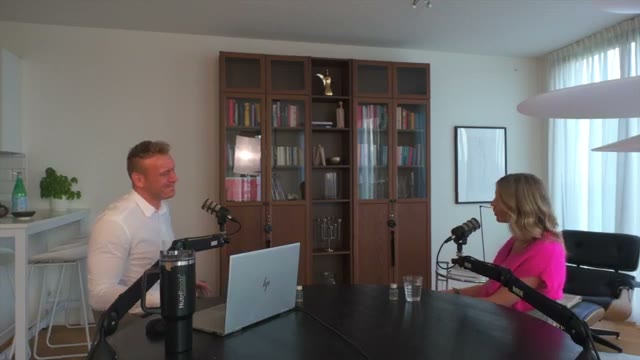
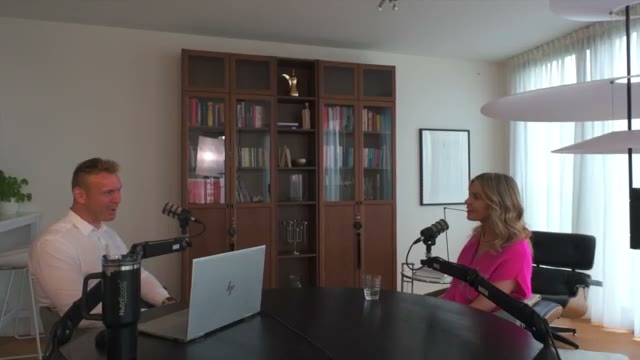
Psychologist, single mom and trauma survivor. Caroline Middelsdorf on why she shares her path, the prison she still lives in, and the inner freedom so many people are looking for.
I'm a psychologist. That's one thing. I'm a single mom. But the most important part is I'm a trauma survivor myself, that I shine that light on the path I've walked on. But not because it's about me, but because many people are in similar shoes. It's about growing and healing inside. Not just you believe at this point, maybe others as well. And you can change these things about yourself. You can change your subconscious mind and heal that. I'm grounded. I know who I am. I know that's not arrogant, not narcissism, but it's like I have that solid foundation within myself.
Jonathan
Can anyone heal from trauma?
Caroline
Trauma is a label. You're not that label. You don't have to wrap your identity around the trauma. Unfortunate truth is, that's a tough pill to swallow. You probably have, but don't we all want to live a life that is worth living?
Jonathan
And is that what it looks like when trauma doesn't have a hold over you anymore?
Caroline
Yeah, exactly. It's part of the story. We all have one. I think that's the most important thing. We all have a story. We all have something somewhere in our life. And yes, let's be honest. If we name it traumas, traumas are part of life. That's death. Death is a, the trauma for the people that we leave behind. You're not alone. We all struggle. Of course, I have days when I'm tired, but there's never a day where I don't want to.
Jonathan
But you feel comfortable sharing your story with us?
Caroline
Depends on how deep you want to go and how much time you have. But
Jonathan
I'm, I'm, I'm looking at the guys sitting here.
Caroline
But this is something I've never shared, Jonathan, on any podcast or with anyone.
Intro
Caroline Middelsdorf is a clinical psychologist, psychotherapist, and a trauma specialist. Many others stop at symptom management. She goes for the root cause. Her mission is not only healing but deep transformation and post-traumatic growth. Her Phoenix trauma program is revolutionary. An intense holistic journey that takes people not only from their darkest periods of their lives, but teaches them how to rise up above it stronger than before, just like a phoenix.
From EMDR, schema therapy, somatic body work and finding new meaning. She combines the power of science, the wisdom of the body and the resilience of the human spirit. Caroline Middelsdorf, a voice of authority, a beacon of hope and an expert that proves that life after trauma is not only possible, it can be a life of profound meaning and strength.
Jonathan
Welcome. Say it. Welcome.
Caroline
Oh, welcome bij Hart & Zakelijk. Oh, welcome bij Hart & Zakelijk.
Jonathan
Okay. Can we do this one more time?
Caroline
Welcome bij Hart.
Jonathan
Perfect.
Caroline
All right. Now, yeah, got it.
Jonathan
You sound like a regular Dutchie.
Caroline
Yeah.
Jonathan
Yeah. It's almost like you're living in seven years. This is
Thank you for having me. It's been a, been a while, because there was a few times you're like, "When are we going to do the podcast?" I'm like, "I'm ready," but we're finally sitting here.
Jonathan
That's true. Then I wasn't ready. How you feeling?
Caroline
Always nervous.
Jonathan
Always nervous?
Caroline
Yep. Always nervous.
Jonathan
Even after doing many podcast and doing your podcast on your own as well. Still
Caroline
always. I always have, I think it's a healthy level of nervousness and anxiety, but I always feel it. I always do the check-in and that heartbeat doesn't go away. It will take a few minutes, so my voice will be fast in the beginning and get slower as we go.
Jonathan
Yeah, I understand. I, I just, before we started, I'm like, this is the first podcast I'm doing in English, and I'm like, feel the same with you. So, I'm right there with you. I always start the podcast with, with the question, what would be the best possible, pos, possible outcome of this podcast? What needed to be said, or in which way do you need to come across?
Caroline
The best possible outcome for me would be that people who listen or watch this walk away not just thinking, but actually maybe going into an action mode, whatever they would need to do to not change their life, but to, let's say, make things a little bit better in their life, to feel empowered or encouraged. I think that would be for me something that I wish people would take from this podcast.
Nice. I think that's really important. Maybe for the people who aren't, who are listening and like, Caroline, who is Caroline? Could you tell people, maybe who don't know you, tell me who you are and what do you do?
Caroline
Don, I keep it simple because I like it simple. But simple, short, and very precise. Who am I? I'm a psychologist. That's one thing. I'm a single mom, but the most important part is I'm a trauma survivor myself. And this sums it basically up. Just a human on this planet, on this face of earth, who walked a certain path and made it a mission and my purpose to share parts of what I've been through and maybe also healed and worked on, that I shine that light on the path I've walked on.
But not because it's about me, but because many people are in similar shoes and don't know how, where to start, where to go. And I promised myself, if I ever find a way out and a path that seem to be working, I'll shine that light for others. And that's basically also my work now, with my podcast, with my program and everything that I do as also a psychologist, but also just simply as a human. I'm here to help.
“And I promised myself, if I ever find a way out and a path that seem to be working, I'll shine that light for others.”
Wow. Just with that answer, just if people are listening right now, which type of people should pay extra attention? Which people do you think get most out of this podcast? Well, from the things you're saying, which people need to stay in tuned and keep listening?
Caroline
Sometimes I pause because I think, I think there needs to, there's no quick answer to this. Immediately I was thinking this is for everyone, because I think we all have wounds, and sometimes these invisible wounds that no one sees, but we experience, and it's part of life. But I think particularly people who carry these wounds, who seem to be struggling, and they cannot find the answer why, or what's going on, or what happened, or how to continue moving forward in their life, to, maybe they're seeking something, maybe joy, feeling grounded, home within themselves. I think that's the people to, yeah, encouraged to keep listening or watching this episode.
Perfect. I love your answers already. If you look at what you're doing, you already described a little bit about yourself. Do you think other people have the same perception of you? So, how do other people maybe describe Caroline?
Caroline
We need to distinguish who we're talking about, because there's Caroline, social media and podcast hosts, and psychologists, of course.
Jonathan
Started with both examples, if you could.
Caroline
People who I work with, people who see me in my program, for example, or as in my one-on-ones, doesn't matter. I think they see me as someone, obviously I carry a lot of knowledge based on what I did, my education, but again, it's about the path I walked. So the people I work with are people who've been through traumatic things, and they see me as someone they can trust, someone who is not, I'm not in there for personal gain, I'm not in it at all. I'm here to help you and bring that smile back onto your face, that gen, that general kind feeling that I find so important, that I've lost.
And that's how people describe me probably, that I work with, that I do it for them. Sometimes we need that shoulder to lean on. Someone who says, "I got you." Not that I get you there, but I know how to, and together it's easier. And I wish I had that back then. So I'm not your typical psychologist. I'm not throwing information at you. A friend with a distance, but I care, and I have, my heart is in it, and that's what people know.
That's the same for people on the podcast, of course, but the podcast is very different, they am also curious and want to learn more, because that's also important part of being me. I never stop learning or never stop growing. I, and I can know, it, cannot know it all. So that's why my podcast is there for my personal learning, but also to bring out there again to people different forms and things of healing. What can you do? We don't know what's out there, and that's what the podcast is here for, to help
Jonathan
people conscious of what you're doing, about different types of subjects, but also about trauma and everything, just the same, just getting your word, so more and more people know about this. And from the dark places to shining light, and showing everyone that, you know, there's more ways to handle it, handle those dark places, more ways to handle trauma, more ways to handle difficult things in life. And that's the way you try to do. Yeah, that's Caroline Middelsdorf on social media and Caroline Middelsdorf through podcast, trying to create more consciousness in the world
Caroline
and more relatable. I think I want to be that bridge between, and I'm an absolute nerd. I read these research papers and everything, but I, I struggled always finding it, finding it very relatable and easy to get, and that's what I do in my work. I want to make it relatable, build a bridge that also want to, want to normalize the conversation about something that's so important and seemingly most people seem to be struggling with, vulnerability, opening up. We feel a lot of loneliness in this world, and podcasts like yours, like mine, are there to not just talk, but also really empower and encourage to take a next step.
And you told me there's a difference between, or if you were explain who you were, like there's a social media you and then private you. It's, is, is there a big difference between those two worlds, or a difference you create on purpose, or how, how can I see that?
Caroline
There's not a major difference, and I think I'm very transparent, but this is something I've never shared, Jonathan, on any podcast or with anyone. So not many people know about my personal life, and I lead with purpose and with heart in everything that I do, and that I'm the same person, of course, in my personal life, but in my personal life I'm still a prisoner that people don't know. So that's the difference of, I am helping, healing, helping other people heal, and I am healed myself, but I'm still a trauma survivor held in a prison.
Jonathan
And what is the reason, besides you being so open, that is something you don't talk about? Like you said, is, "I never deal of, I never talk about this in a, in a way." Would you like to share more about that prison, or share more about that part? If you, you don't have to, of course.
Caroline
But there's not much that I can say at this point, simply because I have a lot of legal things going on in the background of it. But I also can share a few things, and that's also something people aware of, that I come from an abusive, highly abusive relationship. And, and that's the thing that I made a mission, obviously, to help empower others beyond, of course, abusive relationships. But there's also the subtle things in life that no one sometimes sees, and that's the tricky part where we need to be careful with different shapes and forms of abuse that still can go on for a long time.
And certain things I still have to deal with, and I take them obviously through my own healing journey in a different way, more head-on, more confident, more calm, that I couldn't do when I struggled with PTSD myself.
Jonathan
But that doesn't mean that there is still struggle. Doesn't mean you still have to deal with things which affect you, not being as free as you could be, and doesn't also means, yeah, you're still fighting things, demons, on the outside or inside because of it.
Caroline
True, but this is also an important message. I think, I find that very important, because a lot of times people hear that you can only heal if you step away, and from people, or you have to cut all communication. There are circumstances in life where you cannot do that. You and I, we both have, and I think it's okay to say, children. So, you cannot cut that cord. That's a cord that is, I still hold a lot of love
Jonathan
and there's a lot of emotional attachment to your own children,
Caroline
but there's obviously another person in the picture, to that you constantly basically thrown into and triggered, or you have to communicate.
Jonathan
Yeah.
Caroline
So that's not for everyone, and I think that's so important, that you can heal and you can do your work, and you can also manage things very differently, the way how you show up in these dynamics. But that doesn't mean you can always cut it off, go no contact and look back and say, "Well, never happened." That's not possible.
It's, it's beautiful that you say that, because I also have experience with clients in similar positions, and or sometimes with positions which they need to do something different in order to feel better or create a different path for themselves. And I, I always say this sentence, so for maybe for someone who's listening, like, "I'm going to ask you to do the most impossible thing, but I believe and trust in you that you can do it. For everyone else, it is the most harder thing they can do.
"But for you, I'm going to ask you to do the most impossible thing, is to now not only survive, to now only not deal with everything that's going on in life, but also fight with your inner demons at the same time. Trying to grow. Do something different when you're tired. Do something different when you don't have the energy. Do something different when you're staying strong for your family, when you're trying to hold everything together because you're in survival mode. And then still I'm asking you, I'm asking you to do the most impossible thing, because that's the best way to move forward, because you have to do that impossible thing."
And, and that's the way I said this sentence in a few more sessions, and I'm, yeah, saying it maybe a little bit as well as you, you have to sometimes, because what you said, you cannot always, you don't have always the ideal position in which you can grow, and then you can still choose growth.
Caroline
Yes.
Jonathan
And choose self-empowerment, and choose maybe not the, the situation to change, but the way you're dealing with it and the way you're feeling about it.
Caroline
Agreed. That's definitely possible if you know the right steps to take, and that's why your work is very important, or having someone who can help you and support you through it, because otherwise it becomes very hard when you're stuck in survival mode. You're already in a level of exhaustion, like you said, like you're exhausted.
Jonathan
Yeah.
Caroline
You cannot even a picture tomorrow anymore because it feels so heavy. So having and knowing that there are people, programs, things that can help you, giving you the step by step that you need actually in these moments where you cannot make a decision anymore.
Jonathan
Yeah.
Caroline
And you just walk that, and you walk that, and eventually you start feeling yourself again, or first time maybe, that is, that is very empowering, and it becomes a different ground that you walk on.
Wow. If you look at the way people view you, and maybe because of your social media perception or the way you create content, is there a common misconception people have about you?
Caroline
Common misconception?
Jonathan
Or there are views they have about you that's not true, or ex, exaggerated views they have about you, because I think you're pretty real in who you are, but maybe people have, yeah, misconceptions about you or what you do, or
Caroline
Let's say it like this. Because of social media, there's a following, people attach the following to, let's also, numbers, and they would be like, "You're incredibly loaded." I say that's a misconception. Behind all of it, and this is the real truth of content creation, program creation, I'm saying it really real and authentic here, it is a lot of work, and it's a work with purpose, but it is for me a 24/7 kind of thing. So when you see the things that I'm doing, everything is real. If I take time, it's, I'm slow. I'm doing these things to share with people. But the following numbers do not attach to the money that I earn, and I'm not in it for the money.
That's another thing. I'm in it for the purpose. And I meanted what I wrote there. I'm here and want to heal and help at least a million people. I know that's a huge number, but I promised myself it's possible. I believe it's a mindset kind of thing. My mindset was always very scared, fearful, and had learned certain ways. I'm going into the unworthiness wound of, "You can never do that because you're a woman, because," because I'm like, "No, I can."
And that's important to me, helping others and getting these messages of, "Your work helps me," or meeting someone in the street. I had a woman with a baby in Amsterdam the other day walking towards me and said that my content changed her life. This is for me true wealth. This I will never forget. These are memories, and I'm a memory collector at this point. This is wonderful. This is
great. So if there's a misconception, no, I'm not loaded. I'm stable at this point, but I also come from rock bottom of nothing.
The way you approach your goals is the way I love to look at it, and, and, and the way I, when I work with clients, look at it as well. It's beautiful to have the most biggest goal, because it's never getting to that goal. But the higher the goal, even, even if you reach below it, it's even further than you thought. You helped more people than you thought. Your impact would be greater than if you started out smaller. So even if you're below your goal, you're already further than you ever thought.
“So even if you're below your goal, you're already further than you ever thought.”
So not to put any trillions on there and that, but just big enough to stretch yourself, and then to create a person in which you can grow to reach that goal. I think that's, that's really, really good, and especially if you have an impactful goal of helping a million people, and seeing what you do, just following you for a long time, and then that's why I wanted to have you in a podcast. If someone could reach that goal, that, that, that someone is you.
Caroline
Thank you, Jonathan, that's very sweet of you to say, that means actually a lot.
Jonathan
There's no question for me. It's no question that you cannot reach that, that, that number.
Caroline
Thank you. It feels really good to hear. But I have to say, coming, and that's not, it's not about me. It's about also proving a point in some ways, not just to myself, but it's for everyone, trauma, and I'm one of the people, let's say, call them unlucky ones, who had been going through a lot of traumas in life. And there comes this mindset of play it simple, low, your inner critic is very loud, your unworthiness wound plays out in so many different ways.
And the only way, and that's actually the whole point of it all, is if you go into the action of it, not thinking about it again and again and again, not talking about it like we're doing. No, step by step, slowly and ste, steady continue. And it might take another five years, maybe 10, but I have no rush or urgency. But it's about growing and healing inside. So it, that's also part of my own journey, and that's why social media is out there. But it's again another shining light.
Yes, you can go beyond what you thought is your personality, what is your belief and core beliefs, that not just you believe at this point, maybe others as well, and you can change these things about yourself. You can change your subconscious mind and heal that, and step into something that you would genuinely need and would fulfill you. And for me, this is the one thing that would fulfill me and make me eventually unlive, not unlive, but like go and die happy of like, "Yeah, I did that."
And the way I look at it sometimes, not only you deserve that goal, but they deserve that goal. So the person you grow into is the person that can help those people, and those people deserve that as well. So it be, it's, and, and sometimes people are stuck, and I use that in Dutch, we caller, if, if you have to look at it a different way, it's like sometimes even selfish not to grow. Selfish to stay small, selfish to not pursue your percept, your what you could become.
And in that way, if you grow, it's always going to be like a ripple effect on, on, on everyone you're helping. And that's what I love about my job. I'm also someone who's, yeah, maybe not as a nerd as you, but I'm also a nerd. Like, just love growing, just growing like this, or podcast, or reading, and this, the feeling of when I grow, it's always going to be a benefit for me and other people around me. And that's an extra motivation for me, so I can become someone who can help even more people, and, and that's something even helps me even more. I don't know if you know that feeling or understand what I'm saying.
Caroline
Yeah. It's also domino effect.
Jonathan
Mhm.
Caroline
Of, if you grow and heal, you encourage, empower, inspire other people around you automatically. And that's the beautiful part. And that means also there's also another side. I always believe there's two sides of the coin. You encourage, you empower, and people sometimes follow your path or walk the path with you. And sometimes other people are left behind in that journey. But it's, it can hurt, but sometimes it's also for the better in the long run. So it's, it's a two side kind of thing. You have to always pay a price. I heard from Buddhism and monks I visited with my podcast, there's always a price to any decision, every step that you take.
Jonathan
Yeah. And most people aren't conscious of the price, or aren't willing to pay the price, because they're too much focused on the price and not to focus enough on what if they pay the price, and what, yeah, comes in place of it. And, and they're just too much focus on the pain or the, the negative effects of the price. But I think if you look at it, what could the possible outcome be? What could the price and paying the price be? Is it then worth it? And create like a, yeah, more conscious way of looking at your goals, and not only about the negative side of it, and yeah, if you take the negative with it.
And I think it's the same with trauma work and other things. If you deal with it, face it head on and accept it, it's going to be a totally different journey for you. And now we're just talking about business goals and numbers and everything, but it's also the same, I guess. You look at it, look at it from a distance, and then make a whole hearty decision which you can not only focus on the price, but focus on the whole journey, focus on the steps you have to take. And then I think the decision you make then, it's, it's more, yeah, broader.
True, but sometimes, and we talked about this earlier off record, it's about, a lot of people seek that freedom, inner freedom, and maybe that's the goal they say, particularly also sometimes in my work. The chains of your past, of your life, of your upbringing, of your traumas, however you want to call it, they weigh you down, they hold you back. They keep you a prisoner in some sense. But there's one thing that's critical. If you start addressing all parts of you and looking into that's pain, that's grief, it's also, you know, anger, resentment, you call it, you know, helplessness.
These moments when you address all emotions that you have, that includes also the joyful ones, but you will reach a level of not acceptance but freedom within yourself. And that's what the most important part of my work is also, of bringing people to a feeling of, "I can feel sense myself, freedom, relief." I think that what it, that's what it is, that a lot of people are seeking in life.
Jonathan
I think that's a great, just the sentence, "I can feel a sense of myself." I think that it's what people, and after that I'm, I really want to talk and go into trauma. But feeling a sense of yourself is, it's everything. I think it's like, who are you, and who are you really? And, and that's why I think that's, that's such an important thing in, in your work, my work, but just waking up and having a sense of yourself. I think that's everything.
Caroline
Yes, it is. But it starts with the uncomfortableness of, I'm showing all parts of myself, and it starts also with me, of, yes, I am the psychologist. I am a genuinely happy inner child. I like it silly. I like funny, but I'm also have moments of sadness, and I have difficult moments still. But I also know how to face them and handle them differently. I have a totally different relationship. And that's what we have not been taught. The relationship within ourself and with ourself first. And that's not what they teach in school. That's what they not teach in university or at work. It's always outside of ourselves.
And we talked also about the power. You mentioned it in the beginning, said, "I like to say things out loud quickly." It's vulnerability, but you also said it's about, "I don't like that power over me." And that could be the sense of judgment of others, about how they perceive you, or, and so on and so forth. But that's a very important part, because that feeling of, I hold power. I call it more that I'm grounded. I know who I am. I know that's not arrogant, not narcissism, but it's like I have that solid foundation within myself.
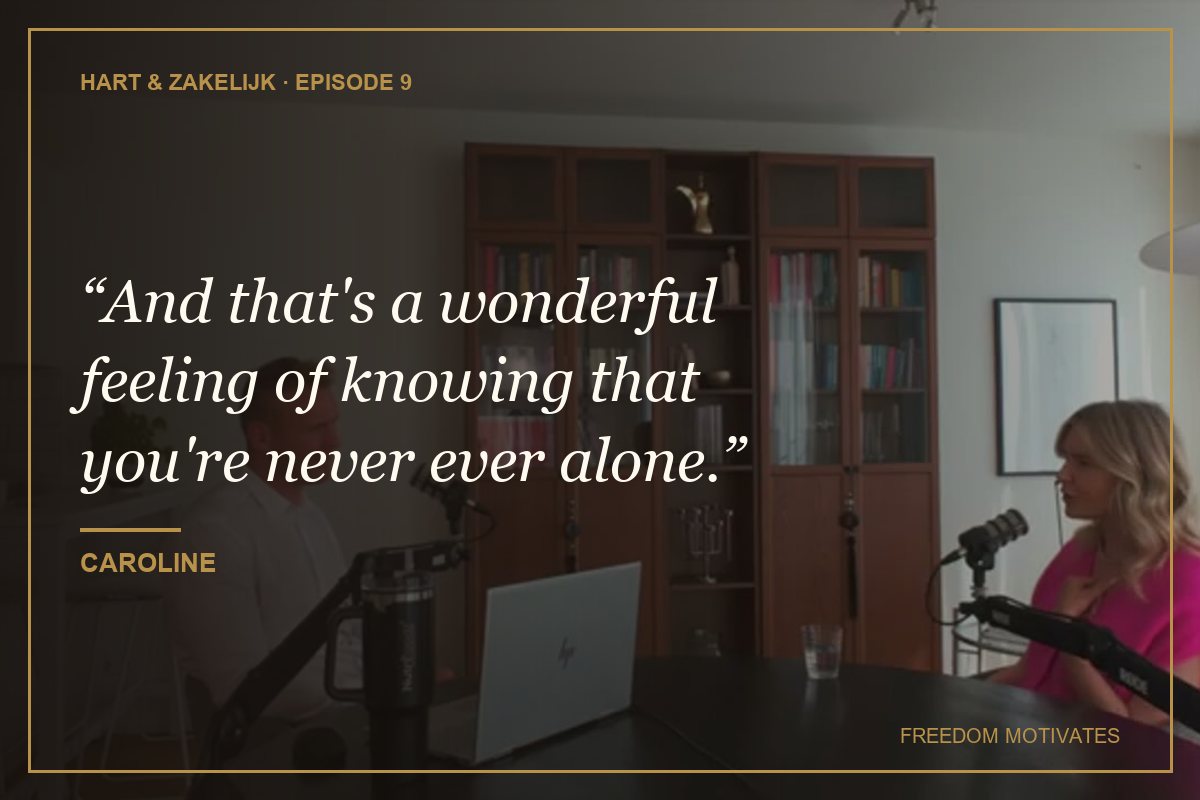
And yes, your feedback might hurt me, and no one likes to hear negative feedback, but it does not go unfiltered to the core of my wounds that I used to carry, and they play out again and again and again. No, deep down, at the end of the day, I might be maybe triggered or hurt, but I can catch myself and I can be there for myself. And that's a wonderful feeling of knowing that you're never ever alone. Always have you at the end of the day.
Beautiful. And just for the people that are, that are listening, before the podcast started, it's, it's, it's a, it's a warm day today, and I'm wearing a blouse, and I wanted to wear a blazer. It was way too hot and I was sweating. I, and I was telling, and telling you, like, I'm sweating, and I used to not talk about it and just trying to ignore it. But in my mind I could, could have a sentence like, "Oh my god, is, is, is, is she seeing that I'm sweating? Are people on camera seeing that I'm sweating?"
And that's what I'm saying, like, sometimes I'm just, instead of holding that shame in or that inner thought, I'm just expressing it. That's why I'm just telling it people now as well. Like, it's still hot. I've got sweat on my arms. But instead of the shame holding power over me, that inner voice holding power over me, I would rather express myself, tell it to, to you, in order for me to relax and then take my power back. And that's why you use that example.
“But instead of the shame holding power over me, that inner voice holding power over me, I would rather express myself, tell it to, to you, in order for me to relax and then take my power back.”
And people have more power than they think sometimes. And people give shame and that inner force more power than they should have sometimes. And I love like creating those new ways, which I used to not do. Just hold everything in. But now, fuck it, everyone. I'm sweating.
Caroline
Perfect.
Jonathan
I'm sweating and it's hot. I don't give a fuck. You can see my armpits. It's okay, cuz I told you, and it doesn't hold any more power. And, and I think that's really powerful, and that's a lot of inner strength come from taking your power back. And a lot of work with trauma makes people feel powerless. A lot of experience in their life which still hold influence over them in a negative way. It's like they feel more powerless of, they don't know how to deal with it.
And that's why I wanted, really wanted to talk about trauma with you, and about a lot of things you do, working with other people. I think Gabor Maté, it's an amazing, amazing author, speaker, everything, and he, he talks a lot about big T trauma and little T trauma. I don't know if you, yeah, you, I like, I like the H. I like the H already, but that, that's like, I'm going to finish it and then I want to hear your views on it already.
Big T trauma is like major sudden life-threatening events, like disasters or vi, violent assaults, and little T trauma are like chronic stressors and negative experiences, such like ongoing criticism or ongoing neglect. And they don't necessarily always are life-threatening, but they cause a significant distress in someone, and over time they have a profound impact. Yeah, the key difference is in the severity of the intensity, sometimes the acute severity, intensity, but both can lead to like mental health issues, anxiety, depression, and trauma response.
Did it sum it up? What could you tell about trauma? And I already, like, you're already like, so please tell me what you think about that big T and little T trauma, and yeah, let's talk trauma.
Caroline
Okay, let's talk trauma. I want to start actually with going a little bit back for just a moment, because you said, "I'm sweating," and this is also, of course, you're holding the power over your narrative, and you said it out loud. But, and that's also why podcast communication is also important. I can also play a role in this, and I truly, genuinely believe if we change the communication and the conversations, how we respond, we can also support each other in some way.
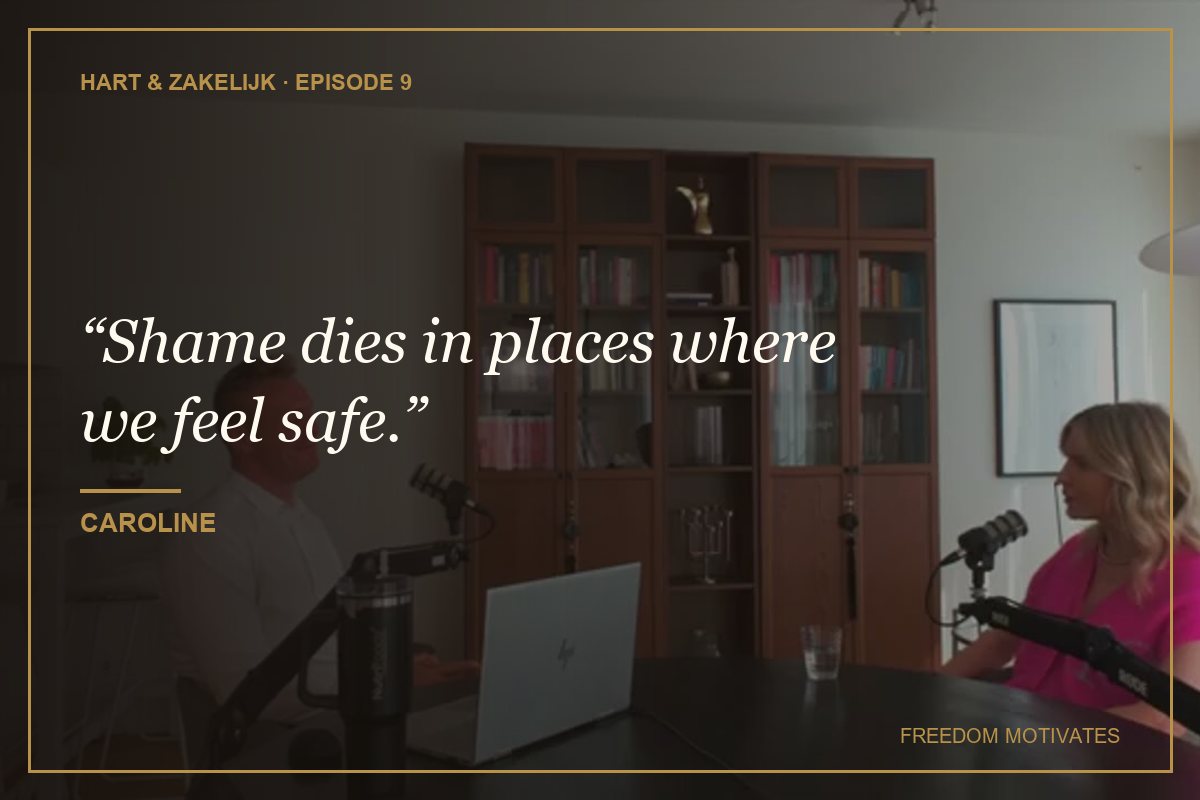
So, if I respond to you in a safe way, and I say, "Hey, Jonathan, great, sweating too. It's 27° here. Your wedding perfect, you might see the sweat dripping off of me, but we can both relax." And what does it do? Shame dies in places where we feel safe. So, we can actually do this, and that's important, is the way I respond to you as well.
But going deeper into that's trauma, trauma holds a lot of shame. First of all, I think that's also important. A very much a common trauma response is shame, guilt, and living with the harsh inner critic that most people actually live with these days, not even fully aware of it. And I could not, I'm a huge fan of Gabor Maté, but there's also new research, and I tr, generally truly believe this, having been through trauma myself and talked to many peoples for decades who had trauma, your brain, your nervous system, they do not know their difference, what kind of trauma you've been through.
Latest research in young children who grow up with constant fighting, arguing parents show similar brain scans to kids or who've been in war zones. So, point being is, as tough as it sounds, the word trauma, I know, holds a lot of stigma, and a lot of people want to step away from it, and I wish there was another word. I call it the invisible wounds, because that's what trauma actually is. Yeah.
I think there is not, not such thing as big or small T's, and I know that will rock some boats out there, because we all have an opinion about it. But I find it, it's not a competition who holds more trauma and who can say, and that is, goes straight to the point.
Jonathan
You're always going to lose that race, by the way.
Caroline
I know. The, the common thing that people would say who actually do have a lot of trauma is, "Yeah, but others have it worse than me, so how can I feel bad of what I've been through?" And it minimizes immediately, and that's the inner critic, and it brings immediately exactly what I was talking about, shame, guilt, the inner critic, important part, loneliness. You feel very alone because you're like, "This is maybe not trauma. Maybe that's not signing off as, as anything major." And there it's like, then I should not share it. I shouldn't complain. I should not say that I'm suffering, because the other person, and it can be your friend, it can be a coworker, it can be a family member, maybe has been through more.
Maybe your mom has been through another form of physical trauma, and you're like, "Oh, but she has been physically abused and had been in a car accident, and I had been living in chronic stresses." But the trauma is the same.
Jonathan
You could always find someone who had it worse. So that's the worst part about it. And then if you make your own trauma smaller, you're also making yourself smaller. And, and at the same time your shame and your wounds sometimes bigger, or the hold that it has over you even bigger.
“You could always find someone who had it worse. So that's the worst part about it. And then if you make your own trauma smaller, you're also making yourself smaller.”
Yeah. And it creates deep sense of loneliness and disconnect from you, the world, the people you're living in. But again, you're learned, and that's the lesson and the takeaway, to hide parts of yourself. And that's what trauma does to you. What the emotional wounds created do to you. And that's why we are struggling so much. A lot of people struggling, because we are living with these wounds, and we're like very used to live in silence, suffer in silence, not share that, because doesn't look good. It's, we learned to live and hide behind masks, and that's what people are tired of, but they don't know how, what to do now, what to do next.
If there would be a dictionary on the table and you will open it and go to the T and find the word trauma, what would your description be?
Caroline
Man, anything that overwhelms you physically, mentally, that you feel in that moment you're not able to cope, and cope with basically, but also creates, as an aftermath, shame, guilt, a huge harsh inner critic towards yourself. And I forgot what I wanted to say and add. Yeah. And creates these wounds. Wounds of self-doubt, wounds of not exactly knowing who you are, wearing masks that you feel like you have to put on, and maybe a deep sense of loneliness.
Jonathan
I love your description.
Caroline
Thank you.
Jonathan
I don't love the experience of it and that people struggling with it. But I think the way you label things are really important, and the way, yeah, you labeled it is, it's a good expression of what it is, but also hold more weight, where a lot of people can, yeah, find something of themselves in. You know what I mean? Look at it and like, "Oh, that could be me." Or, and, and, and a lot of people, yeah, still trauma. It's just, I don't know why, but maybe I'm biased because of my work. Like, there's still so much taboo about this, around the subject trauma. And just saying out loud, trauma, because no, no, we always make it smaller. And that's why it's really important, not just for us to have the conversation, but also have the label of what it is and the description of what it could be. So more people could say, "Yeah, that, that's something," yeah, shine light on something that's in the dark.
Absolutely. I think that's important message. Trauma is a label. You're not that label. I think a lot of people are afraid of labels. It's a similar thing of, "I'm now a depressed person. I'm now that anxious, OCD," you name it. People struggle, and I get that. They struggle with labels because they feel it defines them. You don't have to wrap your identity around the trauma. Unfortunate truth is, that's a tough pill to swallow. You probably have.
“Trauma is a label. You're not that label. I think a lot of people are afraid of labels.”
The only thing I personally would distinguish is, is it PTSD or is it complex PTSD? Is it that one time, real one-time life event of that car accident, as an example, or is it the chronic traumas, where your personality, and that's important part, has wrapped itself around it, not because you chose that or wanted to, because you had to survive. But in both cases you're suffering, but the suffering in complex PTSD can be a lifelong, sorry, I was so distracted.
Jonathan
No. Yeah, beautiful. I think that's really important. And also, in what way did the trauma affect you? And I think it's really important to know the way it's has an effect on you. And if you, for everyone listening right now, you know, does it hold a power over you, conscious or unconscious? Find it out for yourself. I'll find it out if it's like that one thing that happened to you when you were tease, when you're 13, and you had it, or is it like a constant, and that was just a part of multiple things that happened to you in your life. And just know that a lot of things can, yeah, maybe affect you in a way you didn't know yet.
And yeah, that's for the people in the, the beginning stages that aren't conscious, but also people already know they are having like reaction of complex PTSD or PTSD. It doesn't have to be part of who you are. Your label is just what you're dealing with now, but you don't have to stay there. And I think that's really important.
For the first time on a podcast, Caroline tells her story: the relationship that became her personal hell, the night she lost her home and her son, and the promise she made.
I actually never shared my story in a podcast ▶ 45:06
Jonathan
You yourself are also a trauma survivor and a survivor of abuse. You talk openly about it sometimes. But you feel comfortable sharing your story with us?
Caroline
Yep. Of course. Depends on how deep you want to go and how much time you have, for me. I could sit here till tonight, if that's something.
Jonathan
And I'm, I'm, I'm looking at the guys sitting here. Do you have time until tonight? So if you want to talk about her story, you share everything. Okay.
Caroline
Okay.
Jonathan
So you're, you're in a safe space, which, if you want to share your story, you can share it as long as you can.
Caroline
Thank you.
Jonathan
Besides the text I have to send my wife, everything is going to be okay.
Caroline
Great. Brilliant. I actually never shared any of my story in a podcast so far.
Jonathan
Okay. I thought you had
Caroline
No, I haven't. No. Where to begin? A very good question. I'm going to go straight to the, to the moment, and maybe we, we take it from there. No, I need to go a little bit back, because otherwise it will not make any sense. So, as you can see, I've never shared this one. So, it's a little bit a free flow of just sharing what comes up to me. And I'm taking a pause because I want to be as genuine, honest as I can be, which comes with vulnerability.
As you know, I'm a psychologist, and my journey didn't start here in the Netherlands. It actually started a long, long time ago, me being German, studied in the UK, moved to Switzerland to work there as a psychologist. And at that point, I'm very much coming from a humble upbringing, and I've always worked for everything myself, and finally reached a point where I was like, "Oh my god, I'm in a very good place. I have the job that I always wanted." It was really well paid, in the emergency section of a psychiatry in Switzerland, and global work that I could be doing with patients from all over the world.
I felt very stable, happy, lived wonderful, single at that time, and thought one thing is lacking. The last, basically, the cherry on top in life. And maybe a lot of, not just men or women, but maybe a lot of people can just relate to that moment of, now I am craving a partner, someone in my life. And so did, so did I. I craved that, of like, now it's time to maybe start thinking more long-term, family, and I started dating and went on.
And here comes one of those, oh my god, a lot of people will say, another narcissistic story. But I want to shed the light on, on that one stigma as well with my story. It can, and that's not just because of my own belief, luckily, because of books that are out there as well. You can, everyone can fall for it, no matter how stable you are in life, where you're at, if you don't know exactly what to look for, which we do now, through social media, thank you, and wonderful books that are out there these days.
But so I fell for something extremely wonderful. For a guy who was too good to be true, who loved me, for the woman without makeup, for the psychologist that I was, the caring person that I was, for what I thought, for the person that I am, not for what I can bring to the table. And quickly things unfolded, and I found myself in a, the highest of the highs, in a relationship too good to be true, which I know now is a small red flag. But point being is, I went into a relationship that became my personal hell.
I literally did not just lose myself. I nearly lost my life in it, on every aspect of it. If we talk about financial abuse, it's real. It's subtle. If we talk about physical abuse, I've been there. It's subtle. It's not always the clear banging you against the wall, particularly in the beginning. It's the small holding you down, the small locking you in a door and calling it passion. It's the small intimid, intimidation moments where you know you're up against someone who is almost double your physical size. It's these mo, small moments that actually accumulate over time.
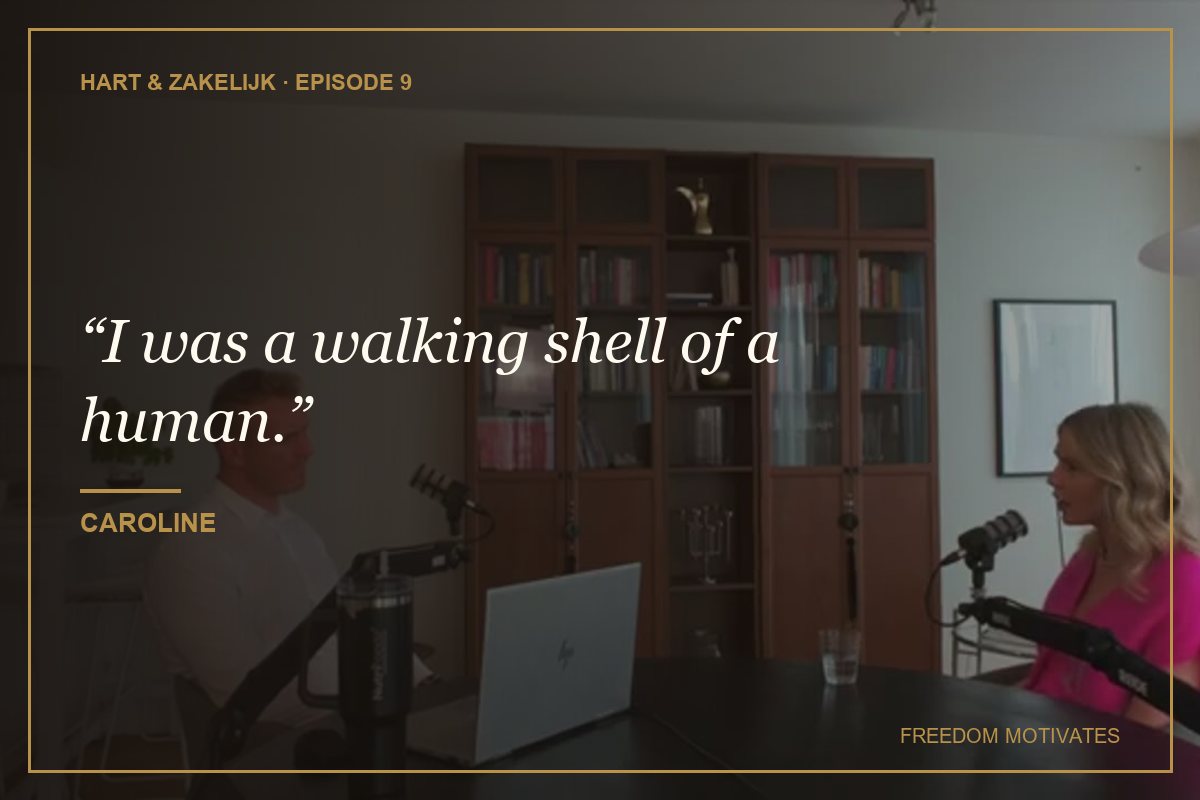
It's the emotional abuse through the extension of your children that are used as weapons against you. That fear creation inside of you. Those moments that made me, and my personality, the person that I was then, I'm not that anymore, because it made it chip away. I was a walking shell of a human.
Moving forward, I got, I was able to, wanted to step out of the relationship, and whoever can relate, you get wonderful promises, everything would change. I believed it from an eye of empathy, and we moved to the Netherlands. That's what I call, unfortunately, I love this country, I love this city, but it's still my legal prison. So we moved here, and here I nearly died. I did lose myself mentally, physically. Mentally meaning I had panic attacks every day.
Had to function as a mother, wanting to be there as a mother, but knowing that the monster will come home by the weekend, because he lived and still does work in the UK and in the US, and only flew home here to the Netherlands, made, making this our prison, away from the people, the connection, the people that we love. So isolating you from the people that you love and care about. And I barely survived it.
I needed, I had no soul, soul through network, no friends. Tried to make it, would not be possible because it would be sabotaged on every level. The chaos would be created. You would suddenly find yourself in situations where you know it's not okay. But somehow your mind is used to the pain at this point. Your mind justifies it, makes excuses, and that's where shame, guilt comes into the picture.
The aftermath of trauma, after a while you start making excuses in front of others, because the shame is huge. You feel, I speak now as a woman, but again, this can be the other way around as well. You want to be perceived as, we are a functioning family. We are a good couple. You start making excuses. It's almost a bit like Stockholm syndrome, a form of brainwashing that happens, which the outside world doesn't understand sometimes. It is not that simple. It's so complex, because it's been, we're talking years later.
Jonathan
Yeah.
Caroline
Looking from the outside, and you can change there, and, but
Jonathan
they don't perceive what's happening, and it's accumulation over the years and years, and the person you were isn't there anymore. It's like you said, a shell of you.
Caroline
A shell of you. You've tried everything. Self-doubt became your best friend, because you learned, "I need to change something. It's me. I need to fix this somehow. How do I get back to what it once was? Why are we never ever reaching that loving, caring, this affectionate platform anymore of a couple or a family? Why is that not possible? What am I?" And that's the, sometimes the empath in people that shows up, just like I did. It's like, what can I do to do, fix it, and you lose yourself in it. You've tried, attempted it, like, multiple times, to change yourself, change things, but it makes you, and then your entire self just crumble and chip away.
And there was one particular night, and I'm sorry, Jonathan, for being so detailed, but you asked, where for me I couldn't even exist sometimes alone anymore. And of course I had to function for my child. So I had to provide on so many levels. Sometimes I also didn't know even if the card was working to provide food for my child. And here's the important element. Even if you, and people would say, "Why did you not work?" There was nothing else, but I wanted to do work, but tricky things sometimes. And that's a pattern.
People in those dynamics would maybe want to get out, but, and I'm calling this out, as saying, the abuser knows that, that this would be your ticket out, so they sabotage on every level what's possible, that you cannot work, create chaos, sabotage. You cannot hold a job. A full-time job would have been impossible in my situation, even though I tried so many ways. And again, keep in mind, I'm not Dutch. I'm a psychologist with a country specific job. So I tried to find work and had found one, but keeping it was difficult. And the money that I made, I provided food and things for my son, of course.
So one night, fast forward, I could not stay with myself. I was like, "Oh my god, where am I?" Lost myself. The best description is, your head is mix, is mixed, like shaken up, and like a mixer. You don't see, you cannot focus. You don't know what the future is. You don't even know what the next day is. The only thing you can have is, "I need to survive for my child." So that was my existence and my lifeline in that sense.
But, and that's one mistake I made. I thought, and that's a common thing that I learned along the way, is, "I cannot help myself. I need someone to rescue me," because when you're so deep in it, you are exhausted. You're drained, and they soaked. If you call them vampires, they really are energy vampires. So I thought, who can save me, in a country that's not my home, my family far away, deep shame. Maybe it could be someone else.
And I decided to end the relationship, but stayed under the same roof. So that nesting situation happened. Nothing I would recommend in a toxic situation, but under the umbrella, what's best for your child in those moments. You don't think clear. You think that's the best thing to do. I stayed. I had also nowhere to go, frankly, because leaving would mean I leave my son behind. And I thought maybe another man can save me.
So I found and see support. Didn't receive it, unfortunately. But that one night, I needed a friend, because I had a panic attack, and I said, "Can you stay with me? Can you have dinner with me?" And he was over for dinner. I've had my son with me. And that night, my then ex-partner came home and found us having dinner. But instead of talking things through, he decided to violently throw me out of the house. I nearly broke some bones. Had some bruises. Anyone who lives in the Netherlands knows these steep stairs, that you shouldn't fall down the stairs. I fell.
Tried to catch my son out of the situation and couldn't. The door was shut in front of me. By the time I went to the police, I was driven with a SWAT car, like a movie scene. Anyone who's ever done that can relate. It's very rare. Back to the house to come and get my son, and he was gone. My son was gone. The house was empty, but more importantly, by that time, and I was wearing one set of clothes, like I'm doing it right now, key lock was changed.
And I was not aware of legal procedures, but there are legal procedures. So legal procedures are that you check who signed on the lease of the house or on the rental contract, and of course then we can go in. Turned out to be that the contract that I visually and vividly still recall signing was never handed in. So my signature, in all trust, wasn't under contract.
So suddenly I was homeless in a country that was not my home. Had one set of clothes and no child. This is the moment that I call my rock bottom moment. Knowing no one. The person who was there said, "This is too scary. I've never seen someone so scary in my entire life." If we talk about that look in their eyes, I've seen it. I know what it looks like. So I was alone, alone in a country, on the streets. The first night I was just there by myself, focused on, how do I find my child back? That's the most important thing that you can think of.
Then I had one friend, a friend of a friend of a friend that I actually barely knew, and I don't know, I reached out, and then he said, "You can stay here anytime." And until this point, it's a very dear friend of mine, just to be very clear. So, I found shelter there and had a wonderful lawyer who took on my case based on the story and helped me first to get my child back, which I haven't seen in two weeks by that point. I had
Jonathan
How old was your child then?
Caroline
Four. These are moments that I can never forget. The moments of being the main caretaker and not seeing your child, but your child, and that's the worst, witnessing things your child eyes should have never seen. Never seen. Having said that, my child witnessed a lot of things beforehand, which was one of the reason I ended it. Moving forward, and that's the interesting part. Legal battles, they say there's no, let's say like this, they take a while.
Jonathan
Mhm.
Caroline
Anyone who goes through them knows, we're not talking about a week, a day. We're talking about years. So it took me a while to find my son back, to fight back for him, to find a home, to create a home from nothing. I had nothing to my name, no money, no clothes, no furniture. I still recall that tiny place that I rented, and I had to stay was in a radius nearby. That's the other thing. You have to be nearby. We're talking about someone who has money, who comes from a banking background, who holds seemingly a lot of power. So there is a power abuse as well.
And so I found my son back and had no choice. No choice of, well, but you do have a choice. Let's be honest. I remember sitting, thinking, this is it. You have one way to go. You can, and I'm very specific here, jump off that balcony. We're on the 20th floor. Or you can continue. And the only reason I continued was my son, cuz I'm loving him dearly. He's a wonderful kid, and he would not, I would never want to do that to him. But this was a choice.
And that was the moment I made that promise. If you ever find a way out, out of literally the PTSD symptoms of not being able to see straight anymore, the panic attacks, the anxiety, lived like years like this, the exhaustion, the fear that you're living in that's created in your body, in your nervous system, your mind. I said, if you ever find a way out, out of this moment, I will help at least one person, that they never have to go through something like this again. That they don't have to face that, that they don't feel alone in this.
“I said, if you ever find a way out, out of this moment, I will help at least one person, that they never have to go through something like this again.”
And so I walked, I walked a difficult path. I picked myself up. I became creative. Another reason why I'm on social media, why I am an entrepreneur these days, why I build what I build, because I had also no choice. But I said, if I do it, I'll do it with heart, with passion and everything that I have. And I did, and I worked, and I did, and I healed, and I continued and continued doing what the other side, and that's exactly, unfortunately, how it is sometimes. They see the light, they see something, they drain you, and their only
purpose, and it's so difficult to say, is to destroy. And I'm not here to be destroyed. And that's why Phoenix is Phoenix. My program is Phoenix. I know how it is. How you burn, how it feels, but how you can come back. And I'm not full of hate. I'm full of love and I'm full of passion, but I have love and hold love. And that's a very different angle.
And I'm not selfish, not narcissistic, but I hold love for myself. And I was always able before that moment to hold love, care for everyone else. And I still can. But I forgot myself in it. I forgot that I have to love and be passionate about myself. That means my boundaries, my healing journey, my everything. And then I can be a great mother, a great partner, a great business person. But it starts within myself.
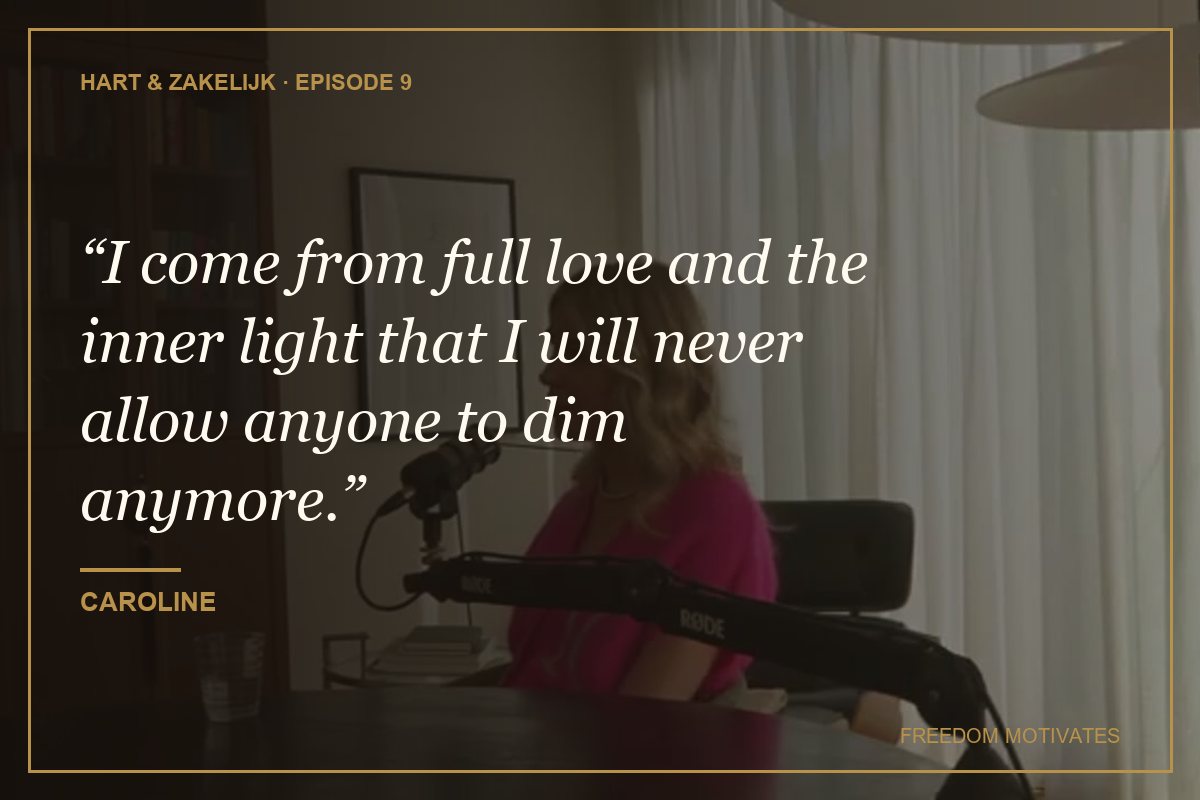
And that's part of my journey. That's part of everything that I've done. I come from full love and the inner light that I will never allow anyone to dim anymore. And that's my story.
Jonathan
I think that everyone who's listening or looking at you telling your story can see that. And can see that so vividly. You don't even have to open up your mouth. I guess it's just the way you are.
Caroline
Thank you. It actually means a lot and touches me deeply. Really does.
Jonathan
Because there's some, some people can say that sentence, living that sentence is where it is, and knowing you and just hearing your story. It shows that that sentence is truer than true, and living with love, and the way you expressed it in way more beautiful way that I could ever tell, but I can see it, and that's a testament to your journey.
Caroline
Thank you. But for me more importantly is, and that's why I shared it. I need to be vulnerable, step into the uncomfortable, live through shame, look in the parts that I play a role in, but also the things that happened to me. But the message is more important, that whoever you are, wherever you are at right now, and if you are suffering, don't suffer in silence. And there is, and I'm not different than anyone. I'm human, and we all are. But you can fight those demons, heal those wounds. It just means it, it takes you.
Jonathan
I want to thank you for your vulnerability and for sharing it. And I think for the people listening to it, it's so important, especially people going through this process. It happens more than you think. So in multiple ways I really wanted to thank you in that vulnerability and sharing that story. If you look at your healing journey and all those things, that in what way did it change you?
In many ways. But one profound way, we all tackle fear, I think, in general in life, and holds us back in so many ways, but sometimes, and that's how I personally experienced it. I've lived in tremendous fear and it derails, destabilizes your entire life, and it makes you do things in survival mode out of fear. You're trying to cope whatever way that works in the moment. And one thing that changed everything for me was tackling fear.
So now, even until today and this point, and yes, I am fearful also about sharing my story, first time, I'm facing fear, and you said that word so well, head on. So anything that I find incredibly fearful, and again, there's a smart way of dealing with fear, you don't need to jump off a house because you're fearful, so. But I'm talking about these internal blockages of, that keep you in prison, that keep you in certain ways where you are at. No, look at it. Face it.
Like the monster around the corner, if you see the tail, you can only anticipate how big it is. I'm the one who's looking now. And at least I'm looking and I'm like, how big is it really? And potentially, and that's the core of my belief now that has changed. No, I will be able, and I'm able, and will be finding a way to overcome this. And your system can learn that. My nervous system has learned at this point. You've done it once. You've done it twice. You can do it again.
“Like the monster around the corner, if you see the tail, you can only anticipate how big it is. I'm the one who's looking now.”
And that's the thing. We can face our fears. It's not about being strong. I hate that saying of, "Oh my god, you're so strong."
Jonathan
Mm.
Caroline
Any trauma survivor, anyone who's been in trauma knows, yes, I know that, but I had to be. But we can be resilient and we can make good choices that are healthy for us and tackle fear. I think that's important.
Your inner voice is not always who you are ▶ 1:11:21
Jonathan
What else did you learn about yourself through this process and through your healing journey, besides you find an inner voice that, for the love of your child, but maybe an inner strength which you dealt with this, so your inner, your own inner phoenix, I don't know how you can otherwise say, but what else did you learn about yourself through this process then?
Advertentie
Nutri foods. Best food. For optimizing. It helped my set for me and focus balance for shoput% nutrifoods.
Caroline
I learned, for example, your inner voice is not always who you really think you are. The echoes of your past, maybe your parents, the belief systems that you grew up with, that inner critic, the self-doubt, that's not, not necessarily who you are. So you don't need to pay attention to every single thought. And again, that drives you also in different ways of actions, of dreams. A trauma, not survivor, but someone in trauma or in emotional wounds becomes a dream dimmer.
They like play it really safe. They stay where they are. They're like, "Oh, this is not for me." They get jealous of others who seemingly achieve it easily. On a business element, I never thought I would be where I am now, and in so many regards, and that made me believe that there is so much possibility and opportunity out there. And that changed the way I think about myself, how I think about others.
I've lived literally through ego death. I've done so many different healing work, from breath work to, you name it, I've done it. I'm trying things. I live with purpose. You said something important. Your work is from pain to purpose. I think that's exactly what my journey is all about. Everything I've been through, and I'm not grateful and I never will be grateful for the things that happened to me, because I could have easily lived without them and been happy. But they shaped me for who I am.
And I love that part of me as well, that hurt part, that wounded part. And it's part of my story, but it will not define me. I am deciding how my story will end, or I'm playing at least a huge part in it. So I have trust and faith within myself, and that's a total different feeling that I did not have before.
“And I love that part of me as well, that hurt part, that wounded part. And it's part of my story, but it will not define me.”
I'm just going to sit in this. Like, just the, the love, the strength from your story is just…
Caroline
And I hate to say it. I hate to say it myself. I know people will say, "Oh, dear Lord, it's just another person that we defined as the narcissistic story." And I know it.
Jonathan
Mhm.
Caroline
But we have to also be looking into, first of all, my own role in it. I allowed for some reason certain people into my life, and that's where my responsibility, and that's what, when people talk about what can you do, where is your accountability in it. It's not about self-blame, but it's about I need to understand myself. I need to map out who I really am. Why am I doing the things that I'm doing? And I become my own researcher.
I'm becoming curious, non-judgmental, becoming curious about the choices, the decisions, the things I do, the behaviors. And I do that, and I will continue doing this for the rest of my life, because healing is an ongoing journey. But I can genuinely say this will not happen to me again, because I care and I know what to look out for, and I love myself so much that I'm protecting myself now.
I cannot feel love and excitement. Cannot not feel love and excitement for you right now. So, I want to express that with a high five. Is that possible? Like, I'm like, I just love, like, your way. I just love the way you, you talk about it, your journey, your strength, and just, you just…
Caroline
Okay, thank you for the high five.
Jonathan
You deserve the high five.
Caroline
Thank you, Jonathan.
Jonathan
If you would like split your life in like before and after, like, was there like a real turning point or a moment that, that made everything change, or like more subtle and different, yeah, small steps in between that made you, yeah, decide to do something, like break the relationship or fight for yourself? Or it's like, is there a moment or a different moments which you like…
Caroline
There's one moment. Christmas, it was. And I went to the, it's called in the Netherlands, who knows it, is the Blijf house. I went there to seek shelter. And that's a women's shelter. In English it would be safe house, will you go when you, with your child or alone, if you don't feel safe in your own home? I went, takes a lot of courage to go, and they had no space for me.
And this was the moment. This was the moment for me where everything changed, where I knew for the first time I need to do something. It's on me. It's a hard moment when you know, seeking for help, no one is there. That was the first moment, a crucial moment in my entire life. A hard one, when you realize, ooh, this is not an option anymore. Calling the police, not an option. They cannot help you.
So did all that. And then fast forward, of course, the moment in the balcony, another very important one: am I continuing this life or not? Another one when your heart is really broken, when your feet are literally, the rock is pulled on your feet, to any mother, parent who can relate, that's your life, your child. And then it was really, and that's what I also do in my work, it's about these small moments.
The small moments when you have this, "Oh my god, I can feel again. I can feel myself." I feel glimpses. Glimpses, these moments. It's like small puzzle pieces almost that come back together, like, "Ah, I feel safe. Okay, I feel good. I need more of this." I need more of a moment without anxiety, more a moment without self-doubt. And you live based on these moments, trying to recreate them again. A little bit longer, a little bit longer. But you've done it once, you can do it again.
And that's the thing. I was like, if I had done it once, I can do it again. And I can do it again. And that creates, and then that's the beautiful part about hope. You're like, maybe there's something beyond all of this what I'm experiencing right now. And that's, that's what kept me going. Lost my child, of course, but putting all of it aside, I'm still a woman. I'm still a human. I needed to feel myself again, and that brought the journey.
And that's where then again the how-tos. I became so curious, because talking is wonderful, but it's not helpful. I had a psychologist. She was like, "We need to go deep." Made EMDR. Then I went into somatic work. All of the healing things. I've tried it. Talked to people, interviewed people beyond, before even my podcast. Spoke to many people who are in these extreme stressful situations, made it special, athletes, did my own research literally.
And that's intention solely for myself, but with the purpose, if I find a way out, I'll definitely share it with everyone else who is in need. And that's where I am right now, years later, many moons later. And I can genuinely say this is me. I am me. I am again the silly, the inner child is here, if we talk about inner child work. I can laugh, I can be silly, I can be serious, and I, I feel genuinely okay with who I am.
Beautiful. In your view, if you look at trauma, can anyone heal from trauma? Because I had a, a viewer that, who sent in a question. First of all, thank you for sending in your question. The question was like, "Will I ever totally heal from my trauma, or will I always be in me, and do I have to accept that?" I think it's, besides a, a good question, is like, can anyone heal from trauma?
Caroline
The question is a tricky one.
Jonathan
Mhm.
Caroline
Because trauma in itself, the way it's framed, sounds almost like an event, and any healing will never ever make you forget what happened to you. But there's a difference when you are in these moments, maybe where one of your listeners is right now. You're still thinking about it. It's still, and that's what trauma does. It makes you travel, or let's say the emotional wounds, they make you travel into your past over and over.
You become this time traveler of overthinking, overanalyzing, still thinking, being stressed about what happened to you, or the life that you didn't have, whatever it is. But you're still in the past. Or you go into the future, anticipate already the worst case scenarios, how things go and play out in the worst case scenario way. Not in a positive dreaming, creative way of the future would like to create. But you're never present as well.
So you cannot be in the here and now, regardless of it. What happens if you're not in the present? You cannot experience, even if you would experience joy, because you're depriving yourself already, by living in the past or in the future, of that moment of really experiencing this moment and yourself in that moment.
Can you heal from it? My answer is yes, you can, but not the way you think you would be. The story, whatever happened to you, or the absence of things, that can also be the emotional neglect of your upbringing, you name it. It will be always part of your story, but you are in the ceiling defining your own future. And you're not being triggered, stressed. You can put it almost like a chapter to the side.
You're like, "Yes, that happened to me. That's my life story," or that one time event or the multiple events, you name it. "But they don't play a role. They're, they're there. But I'm living the life that I feel like I would like to live." And that's the empowering part about healing. So healing is not an end destination. It's not healing and forgetting things. It's sometimes actually the opposite. Sometimes it brings back things that you have forgotten.
Jonathan
Yeah.
Caroline
That's the other side of the story. But it's about accepting and reading the book fully, putting it to the side, saying, "This is what happened. I'm okay with it. I carry this book with me, but the rest of it I'm going to write myself, and I'll be in charge."
“I carry this book with me, but the rest of it I'm going to write myself, and I'll be in charge.”
As wonderful experience. Wonderful. I think people listening to this answer, it's like way broader. So everyone who can listen to this answer can find something in themselves to help them on their journey, because it's all encompassing, that answer. So thank you so much for that answer.
I'm also curious, after, yeah, especially after your story, like, why did you specifically work with trauma?
Caroline
Oh, that's a very simple answer. And I've literally spoke to people in my search of what can I do to get and make a living.
Jonathan
Mhm.
Caroline
While I'm here.
Jonathan
Yeah.
Caroline
And I had two choices. Find a job, and the jobs would be, they cannot be language related, let's be honest, that would be basically at the Albert Heijn, that's a supermarket, on the stocking up things, which would also not give me enough money to live the sustained life here. So I had no choice but finding a way of, okay, I want to do also something that I'm genuinely passionate about, that I can do hopefully for a very long time.
The only thing I could come up with, and I ended up with in my mind, was trauma. I'm not just passionate about it. I lived through it, and I made this promise, remember, a promise: if I find a way out, I'll help. So everyone was actually, if I'm very honest, friends from abroad, people that I've through the course of life then got to know, marketing people, said, "No, never trauma. You can never bring trauma to social media." Everyone advised against it.
And I was like, this one time I will not do what everyone else says. Part of my own healing, just your intuition. And I went with what I wanted to do: bring trauma out there on social media and normalize the topic. Yeah, that's what I'm doing.
Jonathan
I'm so glad you were stubborn. I'm so glad you listened to your voice. I'm so glad. If, if you look at your job and, and working with trauma, and, and besides the passion that everyone can see, and, and the your own life experience, what is something about your job and working with people with trauma, is something that you're really good at? Would you say, like, this is, this is my, this my spiel?
Caroline
First of all, of course, I'm a psychologist, right? So I'm also trained in so many ways. But because I'm also, and I've lived through the things myself, and I still know and I'm aware of my wounds and the skills that come with it. I can read people very well. I can empathize. I know how to channel it, create my own boundaries at this point, of course, but there's still, it's still here, and I use it in a way of, in my work, as an advantage. So when we work together, I'm very able to tap into your experience, what you are feeling right now, what energy you carry.
Jonathan
Oh, it's so weird. When you said that, I, I, I felt a shift.
Caroline
Yeah.
Jonathan
Yeah. You were doing it.
Caroline
Oh, it's beautiful. You're very sensitive for it then.
Jonathan
I know. I'm, that's, yeah, I'm trying to embrace that sensitive side of me, but when you said that sentence, I'm able to. I just felt… Okay, that was weird.
Caroline on professional closeness, anxiety you inherit from earlier generations, breaking the cycle as a parent, and what she says to someone who wants to give up.
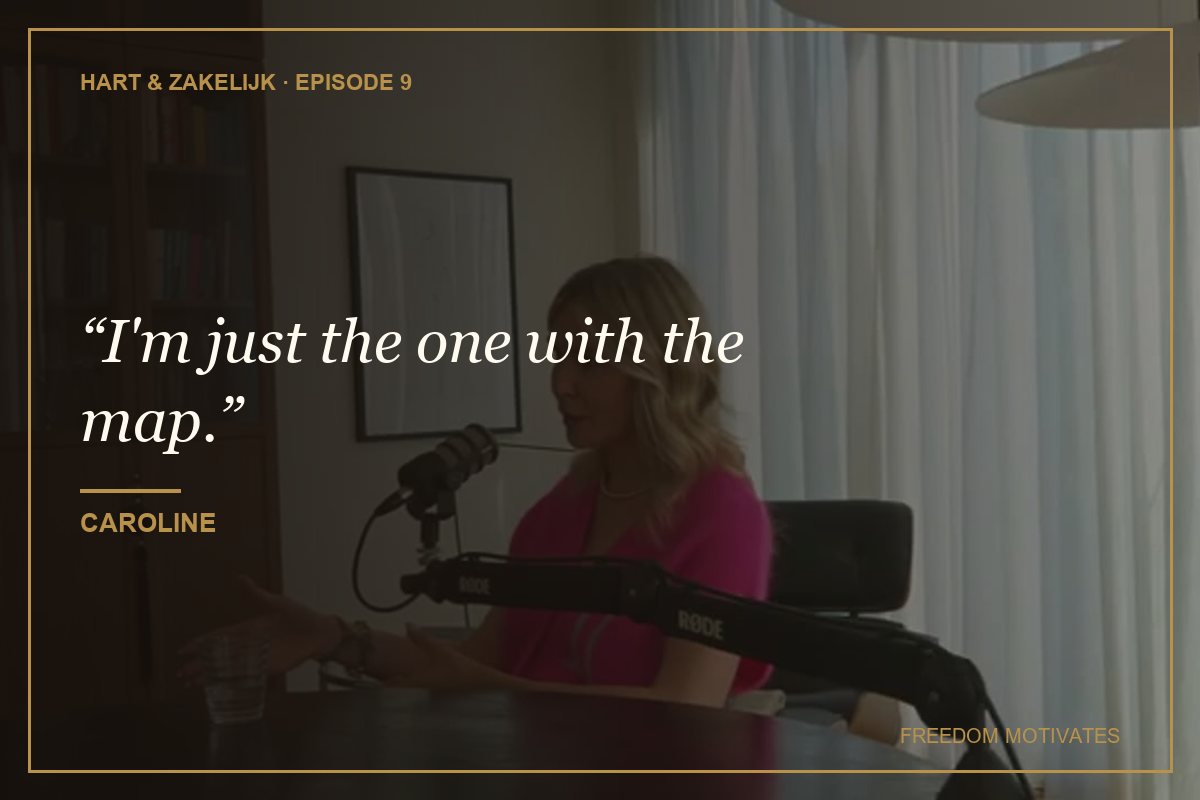
But that's the power of the, the work. You're feeling feelings together. I feel with you. I will not be able to feel exactly what you're feeling, but some parts of it, yes. And you sometimes need that strength, that shoulder. And then I catch you, and we go that step further together. We're into the unknown, into the uncomfortableness. We're working not just one way, my way or the highway. We work in a way that you are basically the captain of your ship. I'm just the one with the map.
Jonathan
Beautiful.
Caroline
But you're in charge, and I'll help you so that you can stay in charge of your ship. And that's a holistic approach. We're not just going into your mind and talking about it. There is a somatic, physical element in the nervous system work. Everything plays a role. You're one. You're one person. And I think that is one thing that I found so important. You're one. What you eat, the way you sleep, the way you show up in your daily life, your friends, the way you are as a human being at work, with yourself. All of this matters, and we needed to look at all.
And I want you at the end to take over that map. Know yourself the best. That's the waters to navigate. And you will drop me off at the next island. And you send me a nice postcard and say, "Caroline, wonderful. Great journey I have."
Jonathan
Perfect.
Caroline
That's my main aim actually in my work, to empower you.
Jonathan
It's so funny. I always tell the same to my clients, like, I want to teach you this as quick as possible, so you can stand on your own two feet and so you don't need me anymore. Not in a bad way, but in like an empowering way, like, you got it, everything in you. And while you were speaking, I was thinking about the sentence in this work, especially if you look at the, the clinical, like the, the, the old school type. It's like professional distance. And the way you're speaking about it, and that was the sentence that came up in my mind: you use professional closeness.
“And the way you're speaking about it, and that was the sentence that came up in my mind: you use professional closeness.”
Where you can hold space, open yourself up and be empathic. But which they always, like, warn people when you do this work, you have to keep your professional distance and you cannot solve their problems. But it's more like professional closeness, which you use, and from your experience you can use in a way to help people further.
Caroline
I think this is a very important one, particularly, again, we using the word trauma. I find it for any inner wound that you're facing, the invisible wound. It's built on trust, encouragement, and someone who believes in you. Only need that one time, but it needs to be genuine and come from a really caring point. And there are people out there who do the work like you do. And we're not here to keep people, but to give them that torch, the light that they can shine onto their own path, whatever that means.
But sometimes we need a bit of support and that shoulder. And that's what I think a modern coach, a therapist, particularly about these things, can be. It's not interfering with life, or I'm not connected to their friends, are not sharing their secrets, but it's about in being involved enough to understand the real person there, and allow that real authentic self to slowly, gradually come back to life, to shine through, to make that spark and turn that spark into a fire. That's what we are doing.
I just love how you talk. I just, I'm just listening, and it's like, oh, it's like me listening to a podcast. Oh, I'm doing, this is my podcast. It's like, it's so funny. I often talk about breaking the cycle, and, and breaking the cycle of gener-, generational trauma, and an expression I use, it, it stops with you. I want to talk to you about epigenetics.
Caroline
Mhm.
Jonathan
And like trauma that's passed down through the genes, war trauma, or the loss of a child or a sibling before you were born. Or poverty or starvation, like a famous example, like the Dutch famine. In a lot of studies they use that, because that's a clear sign of generational epigenetic trauma. What's your perspective on epigenetics and how it can affect us as people?
Caroline
Like…
Jonathan
Generally. Not only your own trauma, but trauma you got through your genes. What's your view on that?
Caroline
Absolutely believing it. Speaking of it, that becomes, and I'm taking me as a personal example, because I don't want to use any client, but I'm German, so a history obviously tells a lot.
Jonathan
Mhm.
Caroline
And I personally carry a lot, and I found this out in my own journey, in my healing journey, that I carry a lot of anxiety that was not mine to carry. It's a generational thing. My grandmother, knowing now, after, after I've done a healing session, and I found anxiety and within myself, and there's a lot of spiritual elements into it. I don't want to go into the details of it now, but point being is, I had a conversation with my mother afterwards, and she said yes to your grandmother.
She had to carry four children through the forests with nothing, and had a lot of, of course, anxiety. There was war going on. But I know I carry a lot of anxiety from a very young age that was not mine to carry, and that only came out later through the course of healing, that I was aware of it. So I totally believe, from a felt experience, yes, that is true. And I heard it in so many people, that they don't know why they are the way they are.
So the epigenetics, there's a beautiful work also, Joe Dispenza does a lot of things around it. I found that to be true. But we can, and that's why naming, feeling it, identifying it is such an important work that we can do in this life. Again, very empowering. This not mine to carry. Okay, but how can I tackle it? What can I do? And that's the work we can do now, and break the cycles through our smartness as human beings, beings aware, self awareness, but the how-to.
Yeah, beautiful. And it starts with knowing them, knowing yourself enough, so you, yeah, and your emotion enough, that knowing the difference between who you are and what emotion doesn't, like, fit that narrative, and…
Caroline
Yeah.
Jonathan
And then being conscious enough that it's, oh, maybe it's from somewhere else, and then start that journey there.
Caroline
Yeah.
Can you end generational trauma with yourself? ▶ 1:36:44
Jonathan
Beautiful. Someone asked me also this question, but I'm, I'm curious about your view on it. Can you really end generational trauma with yourself, so you don't pass it on to your children?
Caroline
Yes, you can. I genuinely believe in it. And some people would again rock the boat. But I've seen it many times, including myself. You are changing the way you show up, the way you are. And yes, it does. And it sounds sometimes terrifying, your personality changes, but that means also how I tackle things such as anxiety or other things within my body. So I'm teaching this also my child.
The way, how can he handle things differently in life? How can he do t- does, how can he tackle anxiety? What is certain, what is depression? What can I do to be self-loving? So that's a different language I hand over also to my child. And it's not about me entirely, myself, but it's also for the next generations. He will teach is his own children. So there's the cycle been broken, because once you are aware, or let's say like this, once you see it, you can't unsee it.
And when you've started doing the work, you're already changing and shifting small things, but you're not running in full-on blindness, or what we would call autopilot, and your subconscious mind playing out over and over. No, you've done small changes. You've, you already, yes, you interfered with the domino effect of, let's call it, from trauma. I'm triggered, going into anxiety, shame, guilt, inner critic.
I've caught this through self-awareness and the practices that I know, somewhere, even if it's halfway, but it's not playing out entirely. So I changed the domino effect. So I'm changing slowly and gradually myself. I'm changing, neuroplasticity-wise, my brain, my nervous system. So I'm basically a different version of myself.
Jonathan
I love that hopeful message, and, and I completely stand behind everything you just said. And as a follow-up about that, like, what about the extra burden people put then on themselves? Not only do they feel the pressure to heal their own traumas, but also heal, like, their entirely family line. And I'm telling that because I feel that pressure sometimes, too. It's, it's one of the most important things for me as a father, for me in my work. I, I, I put a lot of pressure on myself on that. What's your advice for people feeling that pressure? What would you advise me?
Caroline
Mhm. Generally, I can totally understand it, because when we come from an empathetic point of view, we're thinking not just about ourselves. We think beyond ourselves, and that's most of the time the people we love the most, children, partner, you name it. But a beautiful advice, and that's not mine, but I've been given this a long time ago, is like, if you start solely focusing on yourself, you might feel selfish. It might bring up a lot of uncomfortableness in you, that doubt if, like, am I too self-centered now?
But the thing is, and that's the self thing, with the same thing with plane goes down situation, the advice of like, if you focus on yourself, you can help more. If you show up differently in your life, that means if you start simple thing, meditating around your child, if you small create into new habits that are helpful for you, you're automatically, and that's what I liked so, so much, and authentically and long-lasting, you're changing things in your own home, but also within yourself. That's the first home you live in.
Your energy will shift. Everything will be different, and your child will pick it up, because children are sponges, and they will recall it. So by focusing on you and checking in what feels right for me, what brings me and puts that spark into fire, what is in moments maybe seems to be self-centered when you sit down and take a moment for yourself, but maybe you feel that fire afterwards. The energy is traveling beyond you.
You're teaching your child a form of self-love and self-care without words. And that's the beautiful part. You are doing something for yourself, but in the moment you're doing something that goes beyond, many, for many generations to come. You're teaching something your grandchildren without knowing.
Jonathan
Sounds, sounds amazing. Even though grandchildren are so far away, but this, that thought, it's talking about fire. Yeah.
If someone is watching or listening right now and going through, like, a really, really tough time, and maybe hit their own version, you were talking about rock bottom, or hitting their own version of rock bottom, and feel like giving up, what would your advice be for those kind of people, or someone listening right now?
Caroline
My advice would be: give it one more chance. The voices, the inner voices you hear, the helplessness, the powerlessness, the exhaustion that you feel, and I want to be honest here, they're real. You're experiencing this right now. I cannot talk you out of it. But one thing that I can tell you, and that's maybe much more powerful, is you can feel differently. And you can, and I've been there myself, and you can feel safe, happy, and joyful if you just don't quit on yourself.
If you don't give up, if you one more time believe that you're capable of, and ask for help. I think that's the most important thing. Don't be afraid to ask for help. It's not a sign of weakness. It doesn't make you any less of a human. It's okay. And even if you don't see it right now, there will be a version of you that will be hugely grateful that you didn't quit.
“And even if you don't see it right now, there will be a version of you that will be hugely grateful that you didn't quit.”
Don't know if I can say that again. I don't know if I can recall it, but there a version of you that's going to be grateful that you didn't quit. And that's worth living and continuing to live for, for that moment. And I'm not saying this nearly vanilly from a textbook, but because I've been there, and I'm sitting here now.
I'm grateful too. And I thought about the question to follow up on this one, and I saw you using this quote: "Avoidance never heals. True healing begins when you face what you fear." And for the people just listening to what you just said, I thought it would be a great follow-up question. So, first of all, what's the effect when you avoid your trauma or your pain, like the short term and long term? And second, how do people avoid, what are they running from?
Caroline
Most of the time we're running from ourself without even knowing that we're running from ourself. But that's exactly what the inner wounds do. We can also call it this life, the way, the pot we are thrown into. We are not often in that moment or in that family where we learned to just be ourselves. We learn to be versions that fit into our family dynamic. But then we learn to run from ourselves. Because facing who you really are is not just pretty. It's also sometimes a bit of ugly, uncomfortable, and yes, painful.
“Because facing who you really are is not just pretty. It's also sometimes a bit of ugly, uncomfortable, and yes, painful.”
And facing pain or ourselves can be rough, particularly when we are so used to it. And it's sometimes even encouraged. It's much more important what other people say about you, think about you, and what you feel or think about yourself in that part. What I think about myself, I can hide. I can hide behind that mask. So I'm still receiving the feedback from the outside, and I just go to bed. And that's the difficult part. That's the avoiding part.
I deep down know that I've not been myself. I can maybe not name it like this, but I feel a certain way. And that's the shame. That's the guilt, or the inner critic, or the depression, or the constant anxiety that something is just off. "Let me navigate this, because it's only affecting me, right?" So as long as I'm functioning to the outside world, get the thumbs up, the only person that I, I'm struggling with is with myself.
So that's avoidance. You avoid in so many ways, of like sharing, "I'm sweating, I'm vulnerable, I'm uncomfortable," or not sharing, "Oh, this is a need of mine," or a boundary. I say to you yes when I actually want to say no. These are so simple things, but yes, it's a form of, I'm avoiding me, my need, who I really am, and only I know deep down, because that's what the system, it knows it. So again, goes back to my previous point: when you start facing your fears, when you stop running, and stop running is not comfortable. Not at all.
Jonathan
Hell no.
Caroline
No. It brings up so much.
Jonathan
It never gets easier as well.
Caroline
No, it is uncomfortable. But if you look at it without the judgment, you're just allowing it to be, because it's part of the life journey. How I see it, is part of being human. We're not perfect, and you're not supposed to be, but a lot of people try. That's another way of coping. "I'm just trying to be perfect on every level to the outside world." But deep down I feel actually not at all like that. I have a total different experience.
But once that starts aligning, and that's the work of stopping to avoid, facing your fears, you start aligning your internal world with your outside perception. It becomes one, and then you become strong, a solid person. And that's, that's the work.
When trauma doesn't have a hold over you ▶ 1:48:16
Jonathan
Is that what it looks like when trauma doesn't have a hold over you anymore?
Caroline
Yeah, exactly. It's part of the story. We all have one. I think that's the most important thing. We all have a story. We all have something somewhere in our life. And yes, let's be honest, if we name it traumas, traumas are part of life. That's death. Death is a, the trauma for the people that we leave behind. It can be medical things. There can be so many things that we could call trauma. But it's being equipped, and that's the difference.
Equipping ourselves for these things, but not in forms of avoidance or protection in that level of, no, it's like I'm equipping myself so that I can navigate it. It's not blocking ourselves out of trauma, or avoiding it, or isolating ourselves. It's living a full life with certain things that can be painful, that can be hard pain, but you're not armoring up. You're still softening into being open for new relationships with a full heart, but it requires healing.
But knowing how to heal, that's this, that's the skills. That's the tool set that you can have, that you don't need from me. I can help you find the tools, but the equipment, and that's the empowering part of our work, is you carry that. You have the skills, the equipment, the tool set, however you want to call it, and you can add to it as you go in life. But it will not derail you. It will not pull the rock under your feet. It can hurt. It can sting. Yes, it's part of life. But you will know that, and you feel a safety within that you can trust yourself enough to handle whatever comes your way.
Jonathan
Yeah, I think that's really, really important. And I think the way you said it, like navigating, it's such an important thing, but also feeling that you have all the tools, all the things you could do to navigate it. Or even, even if you don't have the tools, know where you can get the tools, that even already feels powerful to navigate, and feels like you have more control over all aspects of those things, of your trauma, of those emotions, of those uncomfortableness you feel inside of yourself. So I think that's, that's really important.
Caroline
Yes. Find a teacher. That's really how I see it in life. Find a teacher, no matter what you feel you're not really, quote unquote, good at. There's nothing wrong with it. We are not born good, but we, we can learn. Find a teacher who has walked the path. It's not about finding someone who only lectures you and wants to keep you far away. No, someone who walked the path, who shines the light so that you can walk that path, and ideally either be side by side with your teacher, or even encourage you to go a step further. That's how I see it.
That's just who I am: learned helplessness ▶ 1:51:46
Jonathan
Perfect. That's one of the reasons I do this podcast, just to sit here as a nerd and just, like, learning. I'm learning. Come on, teach me something, please. I, I got one thing that I think people who are listening now, and it's, there's a subject I, I really love to talk about as well. It's like, there are a lot of people that say, "It's just the way it is. That's just who I am." People that have giving up the hope for change, or truly believe everything is set in stone.
You know, you, you probably know those people. You probably coach those people, or some are not coachable, just because that's belief is so strong, they're not ready for change yet. But what do you say to people who think that?
Caroline
It's learned helplessness. That's what I most of the time say. And it's a concept that sometimes makes people like, "What is it?" because they would expect a different answer. But the concept, and sometimes you can live a whole life in learned helplessness, which is a form of trauma response, that you feel you hold no control, power, whatever we call it, in your life. That basically life always happens to you, most of the time in a negative or overwhelming way.
So first of all, naming it, but addressing it with compassion, of understanding, "Hey, this is a concept that you've learned to live by, for maybe a young age, maybe your entire life." But, and that's the beautiful part, and we can pull out science, you can challenge your thoughts.
Jonathan
Yeah.
Caroline
But it goes deeper, right? Trauma is also creating core beliefs about yourself. So let's address those. Let's go a level deeper. Let's change those core beliefs and see with a level of curiosity. And it, yes, it requires trust and stepping in, let's say, into the uncomfortable, with me or with you or whatever one who is by your side, who is in there to support you in it. Let's see if you can challenge that concept and way of life, because it is possible. Yes.
And the truth is, and that's the thing to, to understand our personality, and it took me a long time to really believe it. It's about a felt experience, right? It's not about, I need to believe it here. I need to feel it from within that I can change the person that I am. Because we have wrapped sometimes our entire being around pain. And then we learn to avoid pain or hide pain.
Jonathan
Mhm.
Caroline
And that can look in different ways, and it shows up in certain behaviors. It means I become super kind in, I hate that word, people pleasing, because it's fawning. I'm making sure that you always think positive of me, because I can read your facial expression, your body language. I can sense your energy. I can try to say things that would make you feel a certain way, so that I create happiness inside of you. But I get something in return, which is a level of safety and truly control, which eases my mind, eases my anxiety and my potential pain that I want to avoid.
And that's what we do. We want to avoid pain, which is also fear-based. And that's the work of understanding it, but being aware of, like, I do certain behaviors. And that's why you see my content trying to be very relatable, and you, a lot of people might find themselves in it. But yes, we, a lot of people have these invisible wounds, wrapped their personality around pain and fear, and understanding that this is not exactly maybe who you really need to be for yourself. It's not about others.
Let's go and find that person, b-, before trauma happened. And it can be very, very little. Let's try to bring that one back. And that's the silly one, the funny one, the one who you really are. But we need to strip it back layer by layer. And that's a difficult pill to swallow. It takes a bit of time, but it's possible. But it requires a bit of trust, a bit of patience, and you need to find the right teacher, whatever.
Yeah. So hope people listening to this just please put your mouse or somewhere before I ask this question and listen to this again, because this is so, so important. And before I want to go into something, I always tell my clients to help with that before part. It's so, it's, I'm really spontaneous. I just, I'm a blabbermouth. I always say what I think. Again, I just want to compliment you again on the invisible part of how good you are at your work.
Caroline
Thank you.
Jonathan
When you said "feel someone's energy," I again, I felt a shift, and I'm just like leaning into it again. Also for me, in my own journey, as the work that I do, I sometimes find the mental part of it easier than the emotional, the energetic part and everything. That's why I'm this, I'm on this growth journey in the past as well. So I found it really funny when you said energy and you looked at me, you changed again. So that just wanted to tell you, really good at your job, because or else I couldn't feel it instantly.
And what I say to my clients when I'm working with those, questioning your own thoughts, I always ask this question: "Were you born this way?" And just challenge them, as that perfect baby that deserves all the love in the world, that's just perfect, and that's has no fears, that has, like, all those pain stories, everything. That's perfect baby doesn't have all those things. And the question, and maybe it's a Dutch phrase, "Are you born like…" That's, we use it sometimes in a derogatory way, maybe.
But I think it's, it's helpful, because you can see them questioning their own beliefs, and that's where it starts. You know, we're all set in our beliefs, and then when you start to question, it's difficult, of course, but it's also where the word work starts. You can put something else, more empowering, in place of that belief that's less empowering. So yeah.
Caroline
It's beautiful. Beautiful that you…
Jonathan
Never heard? Don't ever heard of that sentence, of that question, really? I thought this was like common thing that people in my job.
Caroline
No, that way I never used my work. "Are you born that way?" No, I mean, I go far, and I go really that far. But that phrase I never used, but I think that's beautiful. Yeah, because that's the true beginning of who someone is, in the essence.
Jonathan
So, oh, okay. That's, it's funny that, for me, it's like, it's not everyone would use that question first. Great. Not first.
I'm curious about this one, and then we're working up to our break. What's something about trauma and working with people with trauma you think completely different than other people? What's your own version, vision? Or something that's, like, opposite than other people.
Caroline
First, I want to say that there are a lot of people out there who work with trauma.
Jonathan
Mhm.
Caroline
And I think there are a lot of different opinions out there.
Jonathan
That's true. Okay. Yeah, that's, you set the tone, right?
Caroline
So, whoever is listening, I think that's also a very important thing. You need to find your person, because it needs to feel right for you. That's one thing that I find very important. I would say, even though I'm a classical psychologist still, I think that I'm working different, because I'm not working from the textbook, not working from that one training that I did. And I love my colleagues dearly. I think they're doing tremendous work.
But because I am, I think, an open book myself, that doesn't mean I'm overwhelming my clients with my story. They have never heard it the same detail like they heard. But everyone is aware that I've lived through trauma. And again, so quickly we can go into a dynamic similar to doctor's office. I think I like that one. It's like you walk into the office, even if it's a virtual one, you feel like you're assessed, you're in this doctor-client dynamic, however we want to call it. I already struggle with the word client.
My work is really a side-by-side kind of work. I try to steer away from "I'm the authority. I know it all." I like that tennis match of us. We're playing together.
Jonathan
Together.
Caroline
We're doing it together. And I can, I can relate. So I can feel you. And that's again the energy thing. But I also really generally see it as, it's a holistic approach. It's something what I said earlier to you, you're one. So we need to, and I'm not a expert in nutrition, but I know a lot of things, because I had a curiosity about it, understanding how is that linked to our internal health. There's physical impacts.
So I work also with physiotherapists, getting the understanding of the body, understanding why we have certain pains, may it be the neck pain, the migraines, the lower back pain, or autoimmune diseases that doctors share with me. So I am behind the scenes, and I've lived my whole life like this, as an expert in some ways, a psychologist working very interdisciplinary. I've educated myself in that way out of a natural curiosity. I'm open for a lot of other modalities, that are not all of them integrate in my work, but if you meet me and come and work with me, I see you as one, and we're going on this journey together as a team.
The bridge between science and daily life ▶ 2:02:34
Jonathan
Sounds like if I'm, if I would speak to you in like five or 10 years, the way you help people would be fluid, and it will change over time, because everything you just said. But would only be more holistic and more looked at from so many different angles, in order to serve the people you're helping with even better.
Caroline
Yeah. But that way needs to be done, and that's an important element how I do my work, and you see it a little bit on the social media as well. It's relatable. My work is what's realistic to do based on everything. And that's where I'm the bridge between science, and what works on paper, to let's bring this into what works in your daily life, for real, as a father, as a mother, as a worker, as you know. That needs to be applied to your life, and that's my work, and makes me different to others.
Jonathan
And I so hope a lot more people in our profession would have that attribute a little bit more. Sadly enough, I hear too much in my field or your field, and, but they can relate, but not at that level, in order to help someone really well. It's good to understand where they're coming from, and then if you do that in such a level, yeah, then it, it's so much more helpful. And that's something I pride myself in as well, and something I learn in, in growing in.
I always, I'm now on a growth journey, trying to, what I say in Dutch, how can I crawl in someone's skin as fast as possible? How can I stand in someone's shoes as fast as possible, with a few questions? I'm just trying to feel, understand, try to picture someone's life, in order to do just exactly what you were saying. Not only know theoretically how to help someone, but understand on a deeper level, not only what everything is like, "Yeah, you got a job or worked," no, but what's someone truly facing, in order to give that advice that truly can help them that day.
Caroline
And yes.
Jonathan
That week and that month, and not only just, "Yeah, this is what you do to change your life and to work through pain and trauma."
Caroline
But that's the fine line. It's a very fine line. And I get it, colleagues, people who work in the field, we are very, and priding ourselves, and so do I, in the ethics of our work. Of course, it's super important, and ideally we all want to do things the 100% right way. It's a normal coach, psychologist mindset, that we want to do things evidence-based and so on and so forth. But we also need to look into something in between. That's the fine line.
If you know, for example, it's a very simple example, but someone who is in self-doubt, stuck in this loop of not being able to make a decision, sometimes in the midst of life, of everything is overwhelming, they cannot make a decision. So having them, and leaving things open for them on a table, and saying, "Now you make a decision," even small things, what kind of freedom you would want, the way you would want things, what are your goals, whatever, they couldn't name that in the moment.
And that's the difference, where you need to be jumping in. It's not taking over or overpowering someone, but jumping in and saying, "I got you." That's the person with the map, saying, "Let's take a right, because the storm is right ahead of us. We should not continue that way." But you still tell them. And that's the form of checking in with them, having an good rapport, a good relationship, transparent, very much vulnerable together, trusting. That's important.
That's for you as a coach, therapist, to build, where you can be honest with each other and be like, "Hey, was the right turn okay for you? Okay, how do you feel now? Are you able to steer a little bit in your own way? Let's test it." And that's the thing of that fine line, feeling it. It's the, comes with the felt experience, how I see it. I could not name it differently. I feel it. I can experience it, and then not just from the top of my mind and a textbook give you the step-by-step plan. It's an internal blueprint that comes from intuition and feeling and knowing within myself.
That's it. Perfect. Had a little break, and I always start off the break with a little bit of energy. You said you took it before, like a ginger shot.
Caroline
I love ginger.
Jonathan
Really?
Caroline
I really love ginger shots.
Jonathan
Yeah. Not all my guests ever had a ginger shot. So, we start with shaking it.
Caroline
Okay.
Jonathan
And then it's perfect. It's, yeah, it's 100% ginger. So, you get a perfect boost. I always react really heavy on it. So, I've got water. You've got water.
Caroline
Perfect.
Jonathan
And…
Caroline
Good for the immune system. Cheers.
Jonathan
Cheers. Proost.
Advertentie
Over. Ginger life. Ginger life. Ginger life% of road for parking for parking. It is perfect boost for
Jonathan
just a quick message. I wanted to thank you guys for watching and listening to this episode, and we really appreciate you guys taking the time off during your day and listening to our podcast. And I would like to ask you guys for a favor. If you liked this episode, would you mind liking this podcast and subscribe on YouTube or Spotify, and we will make sure that each episode will be better than the next. Thank you.
The healthy way.
Caroline
I'm awake, and my taste buds as well.
Jonathan
Wow.
Caroline
Definitely real ginger. If, if it wasn't, wasn't as healthy as it is, I wouldn't have taken it. I know how healthy it is. But oh, normally if I have a reaction like this, I will never take it. A person, food or whatever, who else gives me this reaction, I would avoid, because I know it wasn't, is not good for me. I mean…
Jonathan
Healthier than schnapps, same reaction.
Caroline
Really?
Jonathan
Yeah. Yeah, for me it's like that burning in my throat. So yeah, much better.
Almost there. I have a tradition in the podcast that, where I find a poem for my guest.
Caroline
Mhm.
Jonathan
How I see the guest, or something that applies to their work.
Caroline
Okay.
Jonathan
The way they are. And the funny thing, I found this poem scrolling just on TikTok in bed. I'm like, "This, this is how I see you." But first, before I analyze it, I'm just going to share it with you. It's a poem by Hillary Kun Kane. Hillary Kun. And it goes like this.
Poem in this episode
How blessed am I
Here the poem "How blessed am I" is read aloud. Its full text is not included here for copyright reasons; you can hear it in the episode.
Gedicht
end of the poem Jonathan read for Caroline
At this moment the poem "end of the poem Jonathan read for Caroline" is read aloud. Its text is not included here for copyright reasons.
Oh, that's a powerful one. Very beautiful. It really touched me deeply. I have to say, it really did.
Jonathan
Beautiful poem. And why I think this poem is for you, because it's about embracing life challenges and finding peace in uncertainty, and also a lot about resilience and self-discovery, and also trusting the process, and all those things you show from the things you've been through yourself, and also the work you do with helping people in the traumas.
Caroline
Thank you. Very beautiful poem. I feel like, I hope I can do it justice with the life that I'm living, but it's, it touched me, so I can relate. So you chose a good one, I feel. Yeah.
Why we forget the hardest periods, how to heal what you cannot recall, and Jonathan's own moment with his inner child. Then anger, depression, and where to start when you feel stuck.
What the brain does with trauma memories ▶ 2:14:10
Jonathan
Yes. And before the break we talked about trauma, and also a lot of, a huge part about trauma I want to talk about is memories and trauma. And from my own experience, I've been through a lot in my childhood, and it's normal not to remember, like, your first few years. But I also don't remember a lot from my time I was in foster care or in orphanage, when I was like 8 to 11 years old. Why don't we remember, like, difficult periods in our life, and and what's our brain doing there and and reacting to trauma?
Caroline
Your brain does something, actually sounds strange, but it's out of kindness. So it's protection and care. It makes you forget. It brings these memory gaps. These, sometimes people recall, don't recall years of their life. And if they hear the first time, then they're like, "Oh my god, yeah, I was there." Or they see pictures and, like, "I don't recall any of it." But it's a form of protection, that it was just too much, too overwhelming. Often you're in survival mode.
“Your brain does something, actually sounds strange, but it's out of kindness. So it's protection and care. It makes you forget.”
It sounds very strange, because sometimes you can be in a place and you can be there, but you feel maybe just overwhelmed. There can be, for a child, simply there's too many emotions happening inside of you. Can be pain. It can be the loss. It can be this emotions that you cannot navigate at that time. And your brain does that out of kindness and protection and says, "Okay, this part we're not going to revisit." But the problem lies in your nervous system that remembers it.
And of course, you recall it somehow in your body, but your mind doesn't. So the brain wants to protect you, keeps you safe, but it's still stored. And that's why we say the body keeps score. It is st- stuck or stored in your nervous system, in the core of you. But that's part of what, yeah, the brain does in moments when things are too overwhelming.
It sometimes really goes into the only option that it has. If other options are not available, for children most of the time running away, fighting, that's fight or flight, is not possible. And in freeze, a lot of time we, and that's the word, disassociate. So we are actually, and that's where also memories cannot be formed or stored, in the mind is just makes you forget, pushes them away in the moment, but also long term.
So, yeah, long-term memory, and that's what trauma also does. When we assess it, is often impacted, is one of the indicators that you potentially have traumas in your past. These wounds, that these things that are overwhelming for your mind and your body, that certain memories, childhood, teenage years, are just lost, or you have these memory gaps.
Perfect. And while you were talking about that, I was thinking about an example. I don't know why that popped up in my mind, but it made me think about being in a classroom. And you hear a lot about, like, sometimes the modern way of teaching is not even good for all children, because you sit in a classroom and you have nowhere to go, and children in their own way sometimes disassociate in the classroom.
And so for the people listening, and maybe, like, yeah, maybe have a thought in their back of their mind of like, "Yeah, I don't remember it, so probably the the period in my life wasn't that bad," or "I don't remember it," and and for those people I wanted to use this example, yeah, how much do you know about those classroom years? How much do you remember about all those years, and if you think hard about it?
I think a lot of those years you sit in a classroom you couldn't remember, and only a few personal moments with teachers or moments that are bad, or because of the friends, emotional moments you will remember, but the time in between you probably would forget. I think that's a good metaphor to use, like dissociation and what happens and how your thoughts can filter a lot of things you don't remember. The more I talk about how badly I think the metaphor is, but maybe it's a good metaphor, but yeah, dissociation is is really big part of that. So your brain protects you, basically.
Caroline
Yeah, but it becomes sometimes an automated thing. That's why your classroom example is not a bad one at all. Because if it happens continuously and you're continuously thrown into these stressful, overwhelming situations, being a young child, where also your brain is differently developed at that time, eventually we automatically go into freeze mode, which is dissociation for a lot of people, because your brain decides this in milliseconds.
It's basically not just giving you the moment and the choice eventually. Yeah, it's about repetition over time. It's just becoming what other people would call your default mode. I say it's your program that subconsciously is eventually running. We call it autopilot, however you want to name it, but it eventually becomes so automated, conditioned, that it just happens without you knowing it.
So any trigger that embodies for you physically or mentally the similar situation, that can be a stress response. The classroom, you walk in, it's overwhelming, stressful. You might be already hypervigilant as a being, can be also sensitive brains, so I'm talking also about people with ADHD or other things, where things can be easily anxiety triggering, overwhelming. But sometimes the brain does exactly in these moments automated the right thing, not the right thing maybe for the classroom situation, but to protect you, like automated.
We're not even deciding now fight or flight. It's not an option. We're jumping right to freeze mode. And that's how people continue living their life. It's not the option of fight or flight. It's straight to flight.
Jonathan
Yeah.
Caroline
Fight, straight to freeze, straight to disassociating. And then they wonder, "Why do I not not have so many memories anymore?" Because memory formation cannot happen in these moments. It's really not possible. So this first learning: how do I step out of freeze mode? What do I do to ground myself out of moments like this? How do I catch myself? Find a safety, retrain my nervous system, and then the mind will follow.
Jonathan
Perfect. You already gave answer to the question I never asked. So perfect. No, perfect. Because that was my follow-up question, like the people dealing it, and you said, like, a body keeps score. So how can you, like, recover those things, so you can do the work, so you can touch the the the the reason why your brain protected you, so you can feel the emotions your body still remembers? And you already gave a good answer to it.
Preverbal trauma and finding your red line ▶ 2:21:56
Jonathan
I've got a more question about that, that memory about, like, preverbal trauma, and also with a personal example, because I'm the the youngest. I have two older sisters, and they always say that a lot of happened in my home when I was very young, and I don't remember it, but I know it was a huge impact on their life, because I know how the way they deal with life now and how they feel about our parents, and that's a lot of signals, like, yeah, there's been a lot there.
But because I was so young, my brain and my memories weren't, like, really forming, because most of the time people's memory form more around 5 years or older. You remember more after that period than before that period, and your first early memories are mostly after 5 years. But those five years are really important. That's one of the things I teach a lot. I work a lot with, that's one things I'm really conscious of as a father. The way the first 5 years are of, where in some circles they even say the first thousand days of your child are really important.
Is there a way to treat trauma without having memories, like, before, and and and I I told a little bit, like, preverbal trauma? Is there another way to, like, deal with that? I have that question a lot, and because most people, when they have, like, childhood trauma, it started very young. I'm also curious for myself, because maybe I want to go that route as well. So maybe you can give answer to my own personal journey. That's why I'm sitting here as well, being as vulnerable as I am right now.
Caroline
Thank you.
Jonathan
Maybe you got the answer for which step I could take.
Caroline
Mhm. I can imagine it's difficult for you, because you're not holding these memories, and sometimes we are searching, almost hunting for that one memory or the memories that we could, let's say, work with, we want to understand. And the first thing in the whole trauma work is, okay, this one I will not be able to see, understand, and I cannot link it to that specific memory. So I will always hold that gap. It can be that it, certain memories come back, but from that young age, very difficult.
Jonathan
Mh.
Caroline
So more than likely you will not be able to dig that up. But what you can do, and that's the beautiful part that I love about trauma healing: the triggers don't just show up for you in when you think of your past. Your body has stored them. Your core belief has, and parts of your personality have wrapped themselves around that. So it shows up more than likely in your daily life somewhere.
That can be in a romantic relationship. It can be with your siblings. It can be, if you're in touch with your parents, somehow with your parents, or other dynamics. It can be with a coworker, manager. Daily life, depending. But they show up in certain ways, first of all. And that's where the awareness is super important. The hunt and the search is not about that one memory, that one moment.
And frankly, even if you remember it, a lot of people have hundreds, and sometimes even more than that. So we cannot, that's also not physically or time, life. You don't have that much time in your life to go through a thousand, 10,000 of memories. That's, that would be also too much to ask for, and it's not needed. The the search is for your red line, for what's my wound and how is it showing up right now, here in my life?
Are you dealing with anxiety moments? Is there a trigger that drives you into, let's say, emotional dysregulation, meaning you're explosive in certain moments? Or for some people it's even more, let's say, a smell or a certain situation you're exposed to. Is it a group setting? Is it an unfamiliar place? Is it, is it, is it? So it's more the exploration of what's my red, red line? What's my wound? And that you can heal anytime.
Jonathan
Yeah. So instead of starting at the beginning, you start at the end, and maybe the the symptoms, the the thought process, the the where else does the effects of it show up in your day-to-day life, and being conscious and explore that and trying to figure out from there? Maybe go back, or just start there, and then find a way, like, how can we, yeah, subside it, find a way to live with it, and yeah, start with the end.
Caroline
Exactly. Overthinkers, there's nothing wrong with overthinkers, but sometimes it can
Jonathan
Become your safety net.
Caroline
So it becomes, something, something happened that you became that overthinking. That overthinking became your safety net. Always finding a solution, but it goes also further. It is often anxiety triggering, very stressful for your nervous system, or going into worst case scenarios, or in the past. Again, you're traveling, time traveler. Like I said earlier, you're going into the past, overanalyzing what I've said, what I've done, should I have done differently? Your inner critic shows up.
Here we have it. What's going on as a wound, and that's the one you can work with, through EMDR, through other imaginary exposure practices, somatic work. That's what you can do, because you can learn and teach your system to step out. And it's so difficult, as this example, to to name that one, to step out of your mind into feeling things and allowing that trauma that's stored, and it's not physically stored like a picture in your nervous system, but the response of your body physically to it. You can change the course of it and heal that wound, so it doesn't play out that way anymore, maybe like it did your whole life. And that's what trauma healing is. It's not that one memory that you need to have.
Perfect. I've got a rather, I think it's a good place, just I share it with my clients, but why not share it on the podcast? You've been vulnerable as well. I've got an example which, I know there's been a lot happening before I was five, but because I've become, and that a lot of parents maybe recognize this feeling. Once you become parents, a lot of things might come up, like older parents, older, older patterns, the way you were brought up, and and other things. And with me, it's also similar.
So I'm I'm going to share, like, two personal experiences where I self-soothed myself and did a little bit self-help in those moments. A little bit similar moment, but one moment, like two months ago, when I, my daughter was woken up in the night, and I cuddled her, put her in the bed, and I know, didn't know what happened, but I don't try to label it, I just try to embrace what is and all the feelings that come up. So it's overcame just out of nowhere, hair. I was rubbing my hand over her hair, and I was said to her, "You're safe, darling. You're safe."
Caroline
Mhm.
Jonathan
"You're safe." And as I was doing that, I felt so good to give her a present father, to give her the love that she deserves to. And that felt so good. And while I was sitting there, I walked to the bed. Her bed is, is our bed is the room next to her. I felt an, an instant sadness, and it was my inner child that was basically crying. I needed a dad telling me, "You're safe." I needed a present dad that could hug me at night, who, and without labeling it, I just knew it was that, even though I never thought I would deal, I was, there was something there.
It just, and now I'm like, when those things pop up, I'm just like, don't second guess it. It's there. It needs attention. It need love, unconditional love. And I just hug myself, literally, in my bed, and and like, "You are loved. You are loved. You are safe." And then did with my own inner child what I did with my child.
And just two, three nights ago, it was two months ago, I had, I was before bed. I reflect a lot. Not always helpful when you want to sleep, but I was thinking about a moment with my daughter that day. I'm like, "You're a good dad." I put so much pressure on, like, breaking the cycle and being a good father, and that pressure sometimes isn't always good for me, but in that moment I can really felt the love, and then my inner child was again really critical about me and wanted to share a thought where I snapped during dinner at my wife and, like, I lost my patience.
And then in that moment I, like, caught it. I'm like, "I know, I know I can grow, but now it's time to be proud. It's okay." And I had another conversation, and and similar, it did just popped up, and it's just like that inner child world work. It's sometimes, it comes when, yeah, you're not waiting for it, or it surprises you. And then I had that conversation and I'm like, "You can be proud. There's time for growth. There's also time to be proud."
“You can be proud. There's time for growth. There's also time to be proud.”
And I just talk to myself, talk to my inner child. And then I cried again, sort of, like, two, two nights ago, like, "It's good to feel proud. You don't always have to keep growing. Don't always." And that was the whole conversation about me and my inner child. I don't know why I'm sharing it, but it's like me doing healing parts which I don't remember, healing things I was carrying with me. I never knew they were, and I think that's why I wanted to use this example. So
Caroline
So beautiful how you do that. You have also, first of all, thanks for sharing and being vulnerable with me. But it's also that you have a lot of awareness. So you see also that your mind is not, and the awareness work is not for nothing, because you can catch it. You can identify it. It helps you. It's not running its course. It's show, basically.
Jonathan
I feel a bit weird right now, by the way. It's a little bit vulnerable.
Caroline
It's okay. Thank you. That's, I think, particularly, and I don't want to make it about
Jonathan
Pressing it again, so I cannot keep holding over me.
Caroline
No, but it's beautiful. I find it so wonderful that you can catch yourself, that you can, and that's the thing, what you had is sometimes a grieving moment, and that's what having your own children sometimes does, is you go, and we have our reference points, and that's only what we know and what we've experienced, automatically happens, reference point of what child did I have. You have so much awareness that you maybe deep down inside of you run also on a fear: "I don't want to ever be like my parents, and I'll do everything so that I'm not the parent like they are." And that brings in sometimes that need of, and I'm just throwing it out there, "I have to be a perfect parent,"
Jonathan
The perfect father for my daughter. Something that I've never had. A really soft volume. So not really loud, but soft, if I'm honest. Yeah.
Caroline
But the tricky part is, and that's the thing, and there's also a bit of balance. We talked about this earlier, the balancing part, because when we have these wounds, a lot of times we are picturing deep down inside of us, and our inner child is grieving, is sad, but it's also hoping for that perfect parent, almost a bit like Hollywood, idealizing, you know. And that pushes us in the sceneric, pushes you into, not in a mean way, into that perfect parent you have to be. Hollywood dad is always, you know, and showing up in a certain way, and it forgets that you're also human.
Jonathan
I love to be the imperfect father. Sometimes my wife struggles with this even more. I'm like, "Let's fight in front of our child." She's like, "No, there's a balance between teaching her that you're being human and what's okay and what's allowed." We're still not aligned on that part, but we're having a lot of conversations about that part. So being the imperfect person, being imperfect prepared is part of being human and part of life.
Caroline
Healthy conflict resolution is a way of modeling things, right? But it's beautiful that you are so aware and you can catch yourself through the work that you've done. I think that's amazing. It's, and I'm just more bringing a question back, if it's okay. I know it's your own podcast.
I share my thoughts because I always share my thoughts.
Jonathan
Me too. So we're perfect.
Caroline
But did you also release all the anger that you deep down hold? Because a lot of times we have sadness.
Jonathan
Mhm.
Caroline
But we are very much, particularly when we don't hold a lot of memories. We don't know exactly what can we be angry about. We have heard maybe stories, but the expression of anger, and I'm talking about physically having it traveling through your body. Have you done that?
Jonathan
I'm, it's, I'm, I'm sitting here in in two ways, like one as the coach who just last week had a session about anger for two hours, so know what anger does, and also sitting here as me, feeling how much anger is resonating in me. Maybe a little bit. I think a little bit that's still there, if I'm being honest. Yeah,
Caroline
Because a lot of times, and we talked about avoidance, and it's not that you avoid. I know you've shared, you're vulnerable. You are doing the work. You're helping other people as well. But a lot of times, and that's a concept we have learned,
Jonathan
Mhm.
Caroline
And that's also a concept of, okay, I cannot show anger. Anger is something extremely vulnerable, actually.
Jonathan
Mhm.
Caroline
It's very human, very much needed as well. But at something, when we grow up a certain way, we should never show anger. The threat, the risk factor of showing that so much that we learned to live with the suppression of it. And maybe sadness can be, because sadness can show up in silence. Anger and silence is a different matter. And that's a feeling that I have, of like working with anger, to allow your inner child to be angry, sometimes furious, and yes, maybe resentful of the things you couldn't have, the lack and the absence of things.
Jonathan
Yeah. Good. Yeah. I still think there's a little bit which I would love to explore, especially now talking with you, and we're still talking about anger. So it's good to write that path even further. I said to a client during that session which I had last week, it's like, sometimes the anger is the only thing that still holds you to the person. And once you release the anger, that's it.
So in a weird way sometimes, and it maybe for the people listening sound like, "What, why, why are you telling this?", is the anger is sometimes the only type of love you only feel for that person, that the anger is the only thing that's left, and if you let go of that anger, what is what you have left of your whole experience? What are your thoughts on that?
Caroline
Yes, I actually agree with you to an extent. I mean, I think first, anger is also something that tells you, one part of it, boundary has been crossed. I think it's a healthy part of you also, a lot of times, that needs to show up for you. But on the other hand, a lot of times, and we can say it differently, let's say someone who grows up with a narcissistic parent, as an example. The only feeling they can have as a form of attachment is that anger, that feeling that they have.
So you've wrapped your entire being, and it's a familiar feeling that somehow, and we cannot sometimes let go of it. That's where we are resistant, because deep down every time you feel a pinch of that anger, you reconfirmed something that, not just a connection, actually part, and that's what I, the whole point of the personality creation is who you are. You confirmed parts of you, of like, "Feel myself again. Oh yeah, that's me." True. And that's where you said to me also these lines of, people say, "Yeah, that's me. That's just how I am." No, no. You're not that angry person. That's the person that was created and needed to be there, without negativity, without judgment, helped you survive.
Jonathan
Mhm.
Caroline
Anger maybe got you also out of it. A lot of people run
Jonathan
Really, really, on a personal level understands it as well. Yeah.
Caroline
People become successful based on anger, based on resentment. It becomes their inner engine. Makes you successful to the outside world. So you become, again, emphasizes and actually strengthens that bond within yourself with that feeling, even though you might not express it to the outside world. So that's, but that's what becomes a tricky, tricky thing, because inside of you, suppressed anger shows up as anxiety, to the outside world, or maybe you experience phases of depression. You're like, "Why is this happening?"
Maybe you're not showing it, because the mask is very good and functioning, but that's where I'm talking about, you're living your whole life or freedom. That's the work. No one sees it. That's the invisible wounds. But it's, and that's what healing work is. It's about you. It's not about the others. It's about how you feel in your body, within yourself. Maybe creating that person, personal bond, that personality, who you really are. And maybe you're not that. But that's means also shedding and letting go of these parts that you're so familiar with. I don't know if I made sense.
No, it makes so much sense. At least for me. I don't know if the person that's listening, but I don't care. It's my podcast. No, it makes so much sense. Yeah. And and it's, it's like sometimes the anger is part of your identity, where you have to, like, separate the two, and even if it's conscious, unconscious, it takes part of who you are in a way, you know, even if it's part of the mask, and internally or externally in the way you express yourself.
And I'm, yeah, that's on a personal level, like, oh yeah, I need to be, when I needed to be heard as a child, I needed to express myself verbally, or else no one would ever hear me. And sometimes that can show up, and yeah, and they say children don't get attention, they will look for bad attention. That's the way I got attent- attention. So, and that can be sometimes labeled as aggression. But it's sometimes even, but if you are a child or adult, is sometimes a way of, "Can you see me?"
Caroline
Exactly.
Jonathan
"Can you hear me? And if you don't hear me, I'm going to shout louder if you don't hear me." And if you, that's outside, but if inside, it shows up especially in being somber, being sad, and then that can turn into depression, suicidal.
Caroline
Yeah,
Jonathan
Because no one saw you.
Caroline
No, but depressed child is often angry.
Jonathan
Yeah,
Caroline
That's the difficult part. A depressed child is not moody lying in the room. It's angry.
Jonathan
Yeah.
Caroline
And a lot of times when we speak about trauma, depression is just the very good friend that comes with it. Anxiety and depression shows up in a teenager, in a young child, totally different than an adult. And adults, we are eventually wanting to fit in, but we make also these subconscious cho- choices of what do I want? Do I want to keep feeling, feeling? Sometimes we become overly empathetic. Other people choose, choose different routes subconsciously and become numb to emotions, avoidant, then they would maybe, and that's where the phrase "hurt people hurt people" continues. These are subconscious choices we've made, created beliefs about how we see the world, see ourselves in it, and the people living in it. And that's what we call then our personality.
Jonathan
Oh, this is so much wisdom, like, every time again. It's like, it's, it's lovely to sit here and just, I really hope that the people are listening is are just like, it's so much there. It's so important just to know about these things. It's so important to know about yourself, about experience, about trauma, about how we as people react to trauma. And and that's why it's so important, like, all the things you're saying, just being conscious of how it can take hold of someone, can create the way they think about themsel-, way how they act in life, and being conscious of that. Being conscious of how we as children, as adults, as people react to life and to the different difficult aspects of life.
And just be aware, in a way that is, that the way you truly will want to live your life, and be aware of, is that what truly makes me happy? Is that what truly makes me feel in line with who I, in line with who I am as a person? Do I really want to wake up every day? And being conscious of all those layers and all those masks, I think it's so important to be aligned with with the true essence of who you are. And then all the, yeah, I find the the example of the onion terrible now, because everyone uses, but it's just all the layers, you know, and then, then go to the core, and you go to who you were, and and and who you truly are, and that's, there can be an evolving thing, but there's also an essence of you, and all those things get in the way of the essence.
That's true. But I think there's one truth for everyone. We only have one life, and we don't know how long that's going to be. Hopefully very long for everyone. But don't we all want to live a life that is worth living? And we feel, feel that we are, like, experiencing life. I think a lot of people are not living or experiencing their life. Sometimes people are just almost seeing it like a film, maybe even black and white film. They're just watching and they're like, "Oh my god, I'm not in it. I'm not experiencing it, nor do I feel alive in my own life."
And since we all share this one truth, we all will eventually die. Why not? If we have everything somewhere hidden inside of our own self, our body and our mind, and we, research knows only so little, but more than before, that we are so capable, and we just, if you know a little bit how to access things, how to work with your body. And I think that's a total new thing, once we become more aware how equipped we are within ourselves and what's possible, and we can try this out ourselves.
Why not trying to live a life that's for you worth living, that at the end of the day, not like nowadays a lot of old people, and I'm, no offense, of course, I'm sure a lot of people lived the full life, but a lot of people live in regret, or live in that "I wish I had." Maybe, maybe you, whoever listening or watching, you can become that person: "I did it, and I'm leaving this life behind fulfilled," whatever that meant for, as such a beautiful way how I would love to.
Of course, it sounds perfect, like perfection. I'm sure I will go through a lot of hardships in life as well. But for some aspects, I would love that if I could say, "I lived a full life, and maybe my hardships were part of it, but I lived full life, colorful. I was in it, and I'm ready to leave."
That's the way. It's so important for so many people to hear, and so many people to live through action. And if the person who's listening right now or looking at us, if that person is stuck or dealing with trauma and wants to change, but it's really stuck, how would you respond to it? Or, yeah, what steps would you recommend for that person to start with, if you had, like, okay, these are the steps, you're stuck, step one would be, and then? Could you give an advice for that person listen right now?
Caroline
Step one is the most important one of them all: realizing that you are stuck and admitting to yourself that you are stuck. I think a lot of people, and that's a common thing, I've been there myself. You live a lot of times in denial of, "No, I can do this," or you blame others or circumstances, and it can be true in so many ways. But first of all, looking at yourself and saying, "Well, no matter how life and what's happening around me, or whose fault it is, sometimes it can be really others, I'm stuck in it. I don't know where to go, how to move on."
But it also comes with the awareness. This is a natural response when I'm stuck. That's possible. For example, I'm stuck in survival mode. My brain, parts of it where I could make these logical steps and help myself, it's not online. My nervous system is overwhelmed. Maybe I need help. So, and this goes back to find the right teacher. I'm not saying everyone should go and seek therapy, because the waiting lists are long. I know that. But it can be even small things. I find something on social media that can help me, because the steps are out there.
It's just, choose one where you feel like, "Hey, that one person, I feel like talks about something that I can relate to, that looks like my life that I'm living right now." And that's the beauty and actually also the power of social media. You can find your person and follow exactly what they are doing. That doesn't mean you need to follow blindly, but sometimes the blueprints on the steps are there, and see how you feel. If you're getting better, if things stabilize around you, that means ground yourself, work with things, find ways that help you getting unstuck and move forward. Asking for help is basically acceptance of "I am stuck."
Jonathan
Mhm.
Caroline
That awareness moment is huge, because that's where change, opportunity, transformation, healing, however you want to call it, lies. And then find help, because there's no weakness in it. It's actually comes from a strong place. I see something is not working out for me, and now I need someone else to help me. And that's important part. You cannot challenge your own mind, because you're looping. You're looping in your own belief system, things that you found to be true in this moment right now. May it be about yourself, about the world you're living in, anything. So you need a bit of support to challenge that, to empower you to make the next step on your own healing journey, whatever that means.
Jonathan
Perfect. Step one, acknowledge that you're stuck. Step two, a find help. Step three, ask for help for the person that most is suitable for you in your position, energy wise, professionally wise, except for really take the steps to get unstuck. Get, take the steps where you feel you're not standing still, but you're moving towards something, whatever that is for the person who's stuck right now.
About Phoenix, the program Caroline wishes she had had herself, about vulnerability as the root of real connection, and what love, legacy and pride mean to her.
Beautiful, and this is just a few things you can do. What I love is you have an own, own way of helping people in a holistic way, with a, a clinical background, with science, with your trauma program Phoenix. Could you tell people more about Phoenix, what you do, what it is? So maybe people are listening now are curious, and like, tell us what, what is the, your Phoenix program? How do you help people through that program?
I'm hugely passionate about Phoenix, because it's something that I finally could make become true, that dream, where I said to you in the beginning, I wanted to help at least one person. Luckily, and I'm feeling very fortunate and grateful, that I can help more than one person by now. But Phoenix is exactly what I wish I had, what I needed. And in moments exactly that I described earlier. Moments where I hit rock bottom. I didn't know the world from, couldn't see straight. Everything felt upside down, overwhelmed. And you just need someone.
It's not about a decision, but you need a guide. You need someone who shines that light on, okay, I walk that path. And that's Phoenix. It's a 3 months program minimum. It can stay longer, but it's a three months program on everything that I've learned throughout my own healing journey. Of course it brings aspects of me being a psychologist as well, but it brings this holistic approach, somatic work, tools, equips you with this skill sets. It's something beyond just talking about
things. It's about something that you can choose and do for your own life, of like, "I will equip myself," and that's something no one, and that's another empowering thing, can ever take away from me, because I'm learning to hold my own map. And that's what healing is. I'm helping you so that you can step away from it eventually and be like, "Okay, now I got this. I'm healing those wounds. I found the red lines. I am addressing them, and I know how to, and in what way, and what works for you."
And of course I needed to be personally involved, so it created also a community around it, with an intention and purpose, because we need to practice things in action. We can heal hypothetically, yes, in our own home, and that's very much needed, but you need to also expose yourself into safe places, and that's what the community is. The outside world will always teach you how far you are, alone with your journey, but it's a safe place, and the community and people who, it's about making you feel less alone. It's about sharing.
It's not about oversharing, but it's about, we're vulnerable together, literally healing together. And not everyone has that safety in their own home or in their environment. And so I create that through Phoenix, with the right practices, and helping people to equip themsel- to heal these emotional wounds. Yeah, that's basically what I do through Phoenix now.
Jonathan
Perfect. And in order for people to just, like you, rise up as a phoenix, stronger than ever before, and equipped with what life challenges can throw at them, or what internal challenges can throw at them.
Caroline
It's both.
Jonathan
Yeah.
Caroline
It's about that you are basically navigating life, and no, no matter what comes at you, that you know how to catch yourself. It's about emotional regulation. It's about that nervous system safety. It's not just one thing you learn there. It's about, like, everything that I find to be true. Nutrition, that needs to be part of what you are, who you are, why the things they are, why your physical body is a, affected by these emotional wounds in some ways. So again, it's all about understanding, but not just that, as actually doing the work and the how to. That's so important. We can understand it, but nothing changes. We need to do it, and together is sometimes so much easier, and I wish I had that. So I created it.
Jonathan
Perfect. Yeah. If you don't have it, created, or think about a way that you can get involved with, and so beautiful. It sounds like an amazing program, which a lot of people still need to this day, and I hope you can definitely get to that million people with that program and with your work you do. So I think it's, it's really important. So yeah, thank you again for just creating that program.
Just before we talk about, you said you were struggling with compliments
Caroline
In the past.
Jonathan
In the past, and then accepting compliments or receiving compliments, so I said, "Let's struggle together." So I would love to help you.
Caroline
That's so beautiful.
Jonathan
Yeah.
Caroline
That's the most important thing you can actually say, because that's vulnerability in every essence, in every sense of it. That struggle together, that invites both of us to be vulnerable, to step out of the comfort zone, but both of us gives also the opportunity to provide safety for each other. And struggling together doesn't mean we are only sharing hardship. It means we're having a different communication, a different conversation. And that's what, and this can be between two people who are not romantically involved, this can be with people, with really strangers on the street.
If we are both vulnerable, it creates and invites emotional intimacy. And that's what connection between humans actually is. And that's what we all need. We all want to connect. We all want to belong somewhere. And that gives you these small feelings of, I feel myself, experience myself. I would call it home, of I connected again, emotional intimate, without any romantic things involved, with other people. And that gives me a form of inner wealth, inner richness, aliveness, that I find so beautiful. So thanks for saying that.
“If we are both vulnerable, it creates and invites emotional intimacy. And that's what connection between humans actually is.”
But thanks, because you said, and I was like, I can repeat myself, "Let's struggle together." That, that's my, what I said, and and you said, "Oh, we should do that on the podcast." I'm really glad we did it, because the answer you just gave me. Talking about podcasts, you got an own podcast called Real, Raw, and Authentic, which everyone now listening, watching now, definitely check out. I watched a few episodes. I'm like, already, like, perfect, like the episode you had live on air, EMDR, and and all the things you do in your podcast. You're being really vulnerable, also, like, creating a space for, for the guest there.
What advice, because, yeah, your podcast is called Real, Raw, and Authentic. What advice would you give people listening now who find it difficult to walk their own path?
Caroline
I'm pausing again very intentionally, because I want to give a answer that really comes from within myself. You're not alone. We all struggle walking our own path. And we're all not walking a straight line. We're not all walking a path that is clear. You're all these rocks along the way, or a winding path. Sometimes it takes turns. But because we all walk a path, we all have a story, and we all actually struggle sometimes with it, or a lot of times, I encourage you to take a few steps and just see how it feels.
And maybe deep down you feel like you're not worth it, or you're so used to putting other people's paths first. Encourage them to walk. It doesn't make you selfish to look at your own path and prioritize yourself. Put yourself on your own priority list and say, "Hey, I'm not only here to help others live a life or a better life. I also deserve one." Doesn't make you selfish. It makes you human, but it makes your life beautiful, and you will see a lot of things along the path when you start walking that you didn't see before. So if you don't start walking, you will always have the same view, and maybe there's more to see. So start walking.
Jonathan
Yeah, this beautiful view. It's a beautiful way of living life. It's why I call my company Freedom Motivates. It's, the more freedom you feel internally or externally, the more it motivates you to be even more free. And what that does with you as a person, it's life-changing for you and the people around you. And I wish so much more people were free to be themselves, free to love themselves more, free to be raw, real and authentic, just like we are in this podcast, but just in all aspects of their life, the darkness and their light being shown.
And that's okay, that you have both. It's okay. We have a duality in ourselves. It's okay to show those aspects of yourself. Doesn't, doesn't make you less deserving of love. Doesn't make you less deserving of the love you should give yourself. And in that way, you should not hold yourself prison of who you are, and and hold other people in a high regard so they can hold you in a prison. But yeah, you, your own happiness. Yeah, it's, it's your own authentic density. Just being you, being real, you, is really important.
Caroline
Yeah, I agree with you. Well said.
Jonathan
My tongue got twisted there.
Quick questions: inspiration and mentors ▶ 3:02:52
Jonathan
If you look at business, totally other, so totally other side, but we're going through the end of the podcast, and I got a few quick questions for you. Which people in business inspire you, and did you have a mentor when you started as an entrepreneur? Two separate things.
Caroline
I'm going to answer first what or who inspires me.
Jonathan
Mhm.
Caroline
Frankly, people who lead with heart, clarity, kindness, but a clear vision, that I find generally inspiring. I think this is also very challenging, to lead with a heart and build something successful. I do have mentors.
Jonathan
Mhm.
Caroline
So many, and many teachers in so many regards, because I cannot know it all. So yes, I do have people that I ask, that I, that walked the path, who created businesses, that asked, how can I do the things that I'm doing? But even there, I'm looking for people who, who can share a little bit, who've been through something. I think I always look for people who hold that good intention, creating something on a solid foundation. Yeah.
Jonathan
You're on a mission to find, like, help one a million people. What motivates you to keep pursuing that goal? What's, besides helping people, what motivates you to keep working on it, to keep going, even on those days you maybe don't want to?
Caroline
Of course, I have days when I'm tired, but there's never a day where I don't want to. My tiredness looks like slowing down, but my purpose is never changing. So that's a very different way of looking at work. It's work, but it's also purpose and passion and a way of life. So it's still exhausting. Need to be real, realistic here. So, but in those moments I slow down, do self-care moments, and then I continue. And I know, and that's the deep down desire within myself.
I've heard many times in my trauma experience what I could not do, how little and less and unworthy of anything I was. And I'm not a person who believes in revenge, payback, but I believe in one thing: tackling things within yourself that you found to be true at some point in your life. And I thought I would be nothing. I'm unworthy, imposter syndrome, you name it. So I'm doing this out of love for myself, but also to prove a point, that you can change these things within yourself. I have a mission. I have a purpose. It's clear. And I know it comes from something longlasting. And I have no rush to, to reach that goal tomorrow, but if I get there or close to it, I'll be grateful forever.
Perfect. If you look at, you're really far on your journey, with your healing journey, the way you work with people. Are there quotes or books that have changed your way of thinking?
Caroline
The quotes you find also on my social media.
Jonathan
Mhm.
Caroline
To an extent, even though I tweaked some of them to my own, let's say, belief, or how I find them to be true. But yes, the essent-, definitely inspired by a lot of quotes, books. I can name a few. Certainly, that Body Keeps Score is one of them. There's so many by now. You see my book, this was even half of it. But I think one thing is also, eventually it's just enough to read about it. Go into the next step, the uncomfortable, and just start doing, even not knowing why you're doing or what you're doing.
Jonathan
Again, she's leading by example. Love it. How would you like to be remembered?
Caroline
Generally, for who I am and what I did, to my work, through my work, that I would be my hope. But I think a deep, deep, deep desire within me is maybe exactly this: you can be a kind leader in some ways. You can create things from love, from a place of kindness, love, healthy empathy with boundaries, and be rich in experiences and help others along the way. We don't need to be the elbow, me-focused society. We can grow together, empower each other, and be richer together in that sense. And I'm not talking monetary. I mean within ourselves. And that's how I would like to be remembered, that my work was contributing just a teeny bit to that. That I would love.
Jonathan
Beautiful. What is something you hope to be get better at? What's something you're growing in?
Caroline
I'm still growing and learning, and I've done a lot of healing work, but I've been hurt.
Jonathan
Mm.
Caroline
So I know my heart had for a long time a huge armor around, and it was needed. I see it. It softened a lot through the years. But here I need to be honest with myself and look into my own healing. I'm still navigating for a life partner, looking for when the time is right, that I feel that I can build something with someone.
Jonathan
It's got to be a really lucky man.
Caroline
Thank you. That's very sweet of you to say. Thank you.
Jonathan
What is the thing you're most proud of?
Caroline
My son. Always and forever I will be proud of my son. He's my inspiration. He doesn't know it, and I don't want to put that burden on him ever, but his existence saved my life. He has a great heart, and I'm grateful for having him in my life, and I hope he's going to be a wonderful young man one day.
Yeah. I love when you speak about your son. Where's Caroline in 10 years?
Caroline
I never make long-term plans, but that doesn't mean I'm walking goalless or without a direction in my life. I have a clear intention. I think that is clear. But I know that life happens sometimes. So things are out of my control, but certain things I can navigate or direct in a certain way.
Jonathan
Mhm.
Caroline
So in 10 years I will probably not in the Netherlands anymore. I stepped out of that physical prison that I mentioned to you before, and I will continue this work that I'm doing, and I've done my own part of healing, and I will be doing, be doing this from a different place. But everything else, I'm totally open for it. But my intention is that I can do whatever I'm doing right now, maybe in different ways, from a different place, different setting, but I will always do this.
Jonathan
I, last, like a month ago, I had a conversation with someone, and was talking about also doing this work, and I said, you behind the camera as well, like, I always check in myself, am I still doing the right thing? And I, with doing this type of work, helping my clients with breaking the cycle, I always get a, a straight yes. And we were talking about me being really enthusiastically talking about, I feel I've grown so much with helping people.
And I was just thinking about me when I was 60, and then with all the experience and all the growth I already have, just imagining me in, like, 20 years, how much I have grown and how much things I can help people with then. I just get overenthusiastic, like, how much growth that is. And I just, I don't know if it's just you, but I know I'm going to do this work for a long time. And I only get happier thinking about doing this longer. And just imagine me there, being finally that zen guru person I always am chasing. But, like, I'm never becoming, but I can't wait to be there.
Caroline
It's a beautiful, beautiful creation of your future vision of yourself. That's what I call wealth, because you're rich in experience. You're full, and if you, and that's the beauty of the bar that we're doing. Yes, it's hard. This has, like every work, its downside, and yes, it's tiring, exhausting, and not always the easiest thing. And yes, you also hit blocks along the way, but it's incredibly rewarding in so many ways. And that's true wealth. You were living in the present moment over and over and over.
Jonathan
Yeah, that's beautiful.
Caroline
That's true.
Jonathan
What is the most important thing we haven't talked about that we should discuss? Is there, is there a thing, like, you forgot that, or there's something "I really need to say," or there's some really important thing?
Caroline
No, nothing that crosses my mind. But I think also this was exactly how it meant to be. Sometimes, yeah, there's always time for another conversation along the road.
Perfect. I have the privilege of interviewing you for almost two and a half hours. I loved it. Which person would you love me to see interview next?
Caroline
Is this specifically in the Netherlands?
Jonathan
You just, what comes up, and get international. It's, it's like, if you, you've just experienced this interview, you're interviewer yourself, but who would you love to see me interview next? Which person do you think?
Caroline
It's a very good one. Does it have to be a person, or can it be also the ideal person that you then find without a name?
Jonathan
This, this, now I'm really curious about your thought process, like, what ghost needs to sit next to my microphone. No, but what do you mean with that?
Caroline
Because I'm envisioning just a very, and I cannot, my mind now goes to The Rock as an example, but the reason why is because he also has a story. And even though he's perceived for the outside world, and that's what I feel is still something that needs to be talked about more: men and vulnerability. And thank you for doing the work that you're doing, particularly as a man, very masculine.
Men suffer so much in silence, and I wish that more men, and sometimes these role models, when somehow The Rock popped up for me, it's like this visual of mascul-, mascul-, I don't know the English word, sharing an honest, true, authentic, vulnerable story, but not for the sake of sto-, the story, but for modeling the new conversation that I feel we need to have, of exactly this, what you said, struggle together, holding safety for each other, modeling this, so that we can change the things a little bit, step by step, into different communication.
Well, I'm definitely going to send in, to send in this bit. I don't know if it's, it's going to watch it, but it's definitely a good, I can try. This podcast is called, I always end up with this two-part question with my podcast called Hart & Zakelijk. What does the word love mean to you?
Caroline
Love means emotional vulnerability. Like I said before, it's not the, the highs and highs, the lows and lows. It's not saying, "I love you." Love is a deep connection, a feeling that's created through vulnerability, emotional safety, holding space for each other, but enabling, empowering each other to grow and heal. That's for me love.
“Love is a deep connection, a feeling that's created through vulnerability, emotional safety, holding space for each other, but enabling, empowering each other to grow and heal.”
And how do you make sure you're infusing this love into your business and your mission?
Caroline
These are the core values of how I'm showing up for myself, for my son, for my friends, for my work. It's just these core. It's like a mission statement that I've deeply ingrained within myself. It's just, and that's where it's becoming real, raw, and authentic. It's just part of who I am. So I'm showing up that way. And yes, I fall off the wagon sometimes, but then I get back on it.
Jonathan
Beautiful. I want to thank you.
Caroline
Thank you.
Jonathan
How was it for you, the podcast? How was the whole experience for you?
Caroline
Very new, because usually I am in the, I call it the magic seat. My, may it be the podcast seat or the coach or psychologist, it's a magic place to be. But I'm grateful that I could be on your podcast, and it's specifically yours, because I live here in this country. I think the work that you're doing is wonderful and so important, and I think I needed that, to be vulnerable, real, authentic, and get an opportunity. So thank you for that, that I could speak here for so long also. Yeah.
Jonathan
But well, I'm, I'm really grateful that you took the time, and I'm really, really helpful, happy with everything you said. And I'm glad you didn't sit in the magic seat today, but just being you. I think a lot of people listening and and watching today, and watching this episode later, are definitely can get something out of it. And that's in a different way. You were sitting using magical words in that way. So you weren't sitting in the magical seat, but you definitely used your experience, your life experience, your story, and also the work you do, the magic to heal people. And definitely, yeah, I'm really happy. So thank you so much.
Caroline
Thank you. I genuinely hope that it can inspire or enable, empower people who are listening or watching. That's the most important thing, so that they start their own journey.
Haar camera stond geblurd omdat haar kantoor rommelig was. Over zichtbaar worden als ondernemende moeder: eerst maken, later schrappen, en echt durven zijn.